Sign in or Register
0
Add Listing
    • Homepage
    • Projects
    • Professionals
    • Business
    • Jobs
    • Blog
    • Shqip
    Add Listing

    HIGHLIGHT: KUNLÉ ADEYEMI

    • Permbajtja
    • prev
    • next
    • prev
    • next

    HIGHLIGHT: KUNLÉ ADEYEMI


    Kunlé Adeyemi was born on the 7 April 1976 and is a Nigerian architect, urbanist and creative researcher. Adeyemi is founder and principal of NLÉ, an architecture, design and urbanism practice, based in Amsterdam, in the Netherlands. Adeyemi studied at the University of Lagos in Nigeria and Princeton University in New Jersey, the United States. Before starting his own office in the Netherlands, he worked nearly a decade at Office for Metropolitan Architecture (OMA).


    Early Life

    Adekunle Adeyemi was born and raised in Kaduna, in the north of Nigeria, and studied and started his early career in Lagos. His father was a modernist architect and started one of the first indigenous architecture firms in North Nigeria in the 1970s. In his mid-teens, Adeyemi had the opportunity to design his first house, for a friend of his father.

    Adeyemi studied architecture at the University of Lagos in Nigeria, and finished his Bachelor as Best Graduate. In 2005, Adeyemi received a Post-Professional degree at Princeton University School of Architecture in New Jersey. At that university, Adeyemi investigated together with Peter Eisenman, the rapid urbanization and the role of market economies in developing cities of the Global South, focusing on Lagos.


    Early career

    In his early career, Adeyemi worked on projects in Lagos, Abuja and other parts of Nigeria. After that, Adeyemi joined OMA (The Office for Metropolitan Architecture) in 2002, where he was Senior Associate and worked for about nine years alongside its award-winning founder Rem Koolhaas. There, Adeyemi led the following projects, in different stages:

    -Qatar Foundation Headquarters, the Central Library and the Strategic Studies Center, in the Education City in Doha

    -The 4th Mainland Bridge and Master Plan in Lagos

    -The Prada Transformer project in 2009

    -New Court Rothschild Bank project in London (2006).

    -Master plan concept for Abuja – AIST, Nigeria in 2006 for the Nelson Mandela African Institute of Science and Technology

    -Shenzhen Stock Exchange in 2006, opened in November 2007

    -The Seoul National University Museum project in 2005

    -The S-project Masterplan for Seoul in 2004

    -The Leeum Museum in Seoul in 2004


    Iconic projects

    LAGOS WATER COMMUNITIES PROJECT

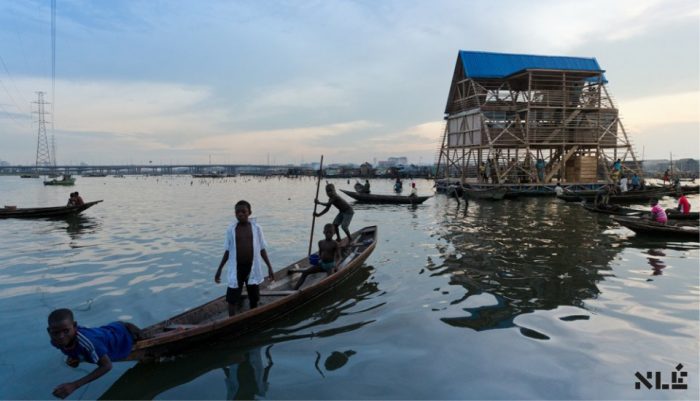
    NLE_LAGOS_WATER_COMMUNITIES5-960x550

    The impact of rapid urbanisation and economic growth of cities in Africa is now common knowledge, yet it cannot be overemphasised. At the same time the impact of climate change is now day-to-day reality. Particularly in coastal African cities that now experience significant increases in sea levels, rainfall and flooding.


    LEEUM SAMSUNG MUSEUM OF ART

    LEE samsung museum

    The Leeum, Samsung Museum of Art project is a 27,000m2 masterplan designed by OMA in 1997. Located in Hannam-Dong – a residential district near the city centre, the complex comprises three buildings by OMA, Mario Botta and Jean Nouvel.


    Qatar National Library

    OMA_LIBRARY

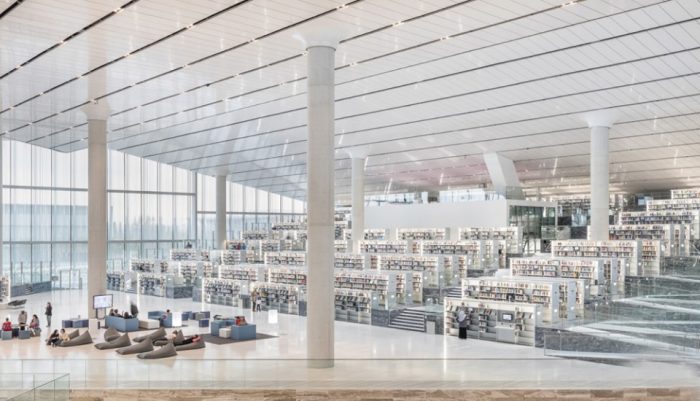
    To realise Qatar Foundation’s vision of a library with a million books in its main collection, we conceived a building in which the entire collection would be instantly visible within a single space. Our design for the Central Library, provides unprecedented immediate access to books – a reactionary approach to re-empower books as the primary medium of education and information in the age of digital technology.


    SERPENTINE SUMMER HOUSE

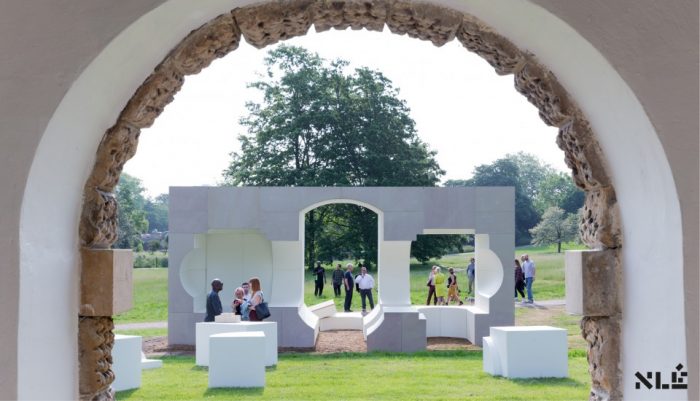
    NLÉ_SERPENTINE_SUMMER_HOUSE-960x550

    With a play on architecture, our design aims to fulfil the simple primary purpose of a Summer House: a space for shelter and relaxation. The design is based on projecting an inverse replica of the historic Queen Caroline’s Temple – a tribute to its robust form, space and material, recomposed into a new architectural language.

    By rotating the Temple’s interior space, we expose the structure’s neo-classical plan, proportions and form. Using prefabricated building blocks assembled from rough sandstone similar to those used in building the Temple, in contrast with a soft interior finish, our composition generates the basic elements of architecture – a room, a doorway and a window – for people to interact with the building, the environment and with one another. The carved out void, homely interior and fragmented furniture blocks create comfortable spaces for people to eat, rest or play – in and around the house – all through the summer.
     

    SEOUL NATIONAL UNIVERSITY MUSEUM

    Seul museum

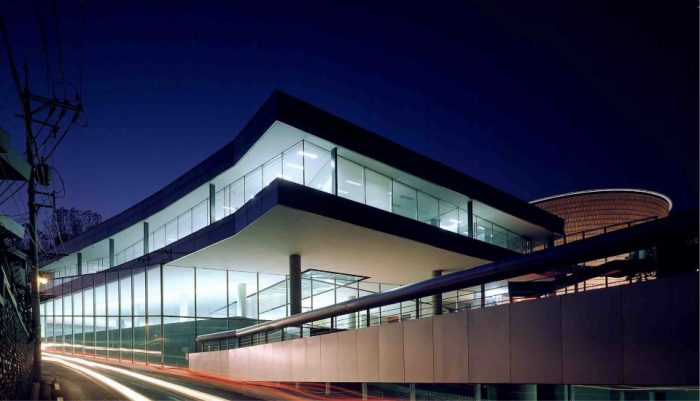
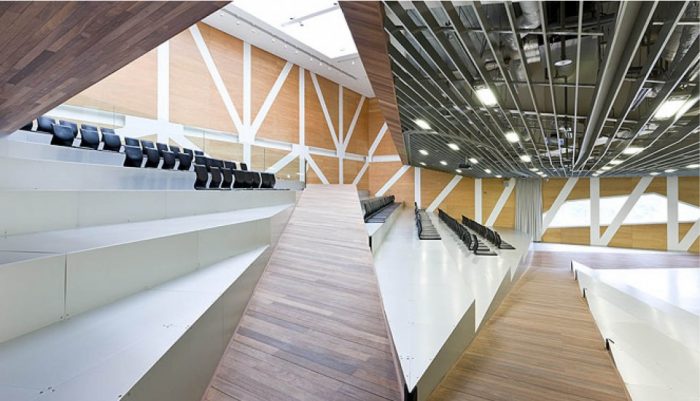
    The Seoul National University Museum is defined by its siting on the side of a small hill, close to the entrance of the university. The building’s form was conceived as a basic rectangular box, sliced diagonally by the incline of the hill. This form is then raised up on a small central core – the only point of contact with the ground – so the building is nearly all cantilever, extending up and down the hill, following the topography precisely and appearing to hover above it. The museum both defines and defeats the hill, and, by keeping the ground beneath it largely free, becomes an attractive conduit between the university campus and the outside community.


    FASHION CITIES AFRICA

    Fashion cities africa

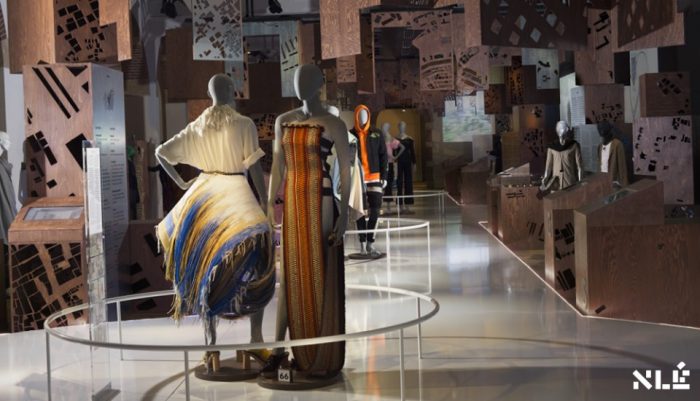
    The concept inverts the traditional relationship of observer and the observed in a typical exhibition. The main visitor circulation on the raised catwalk gives visitors a unique perspective, while the mannequins and fashion objects placed as if watching the fashion show. The backdrop is composed of city- and fashion fabrics made with perforated timber panels and blocks.

    A critical, contemporary and dynamic fusion of fashion, art & urbanism from the African perspective in a new global cultural paradigm through material, form & media into the fabric of city life.


    MFS II – Waterfront Atlas

    NLÉ_MFSII

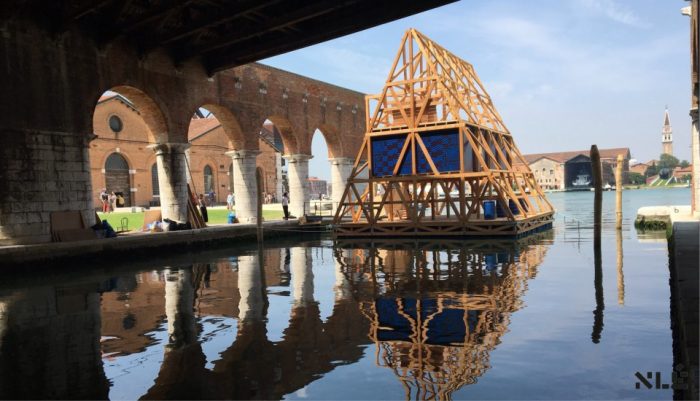
    MFS II is an improved iteration of the Makoko Floating School structure, adapted for easy prefabrication, rapid assembly and a wide range of uses. Just as the first prototype sourced local intelligence from the Makoko waterfront community, MFS II has been designed to suit local conditions and a wider waterfront population. MFS II was assembled in 10 days by 4 builders and was exhibited as WATERFRONT Atlas at the 15th International Architecture Exhibition – La Biennale di Venezia. It is mobile, deployable, and prepared to be reassembled at the next Waterfront.


    Source: Kunlé Adeyemi

    Të fundit

    VLORA INTERNATIONAL AIRPORT

    XPLAN STUDIO
    • Public Architecture

    Sunny Hill Apartment

    Studio27
    • Interior design

    Ioanian Coast Minimal Villa

    andoni studio
    • Villa
    • +2
    Të rejat

    Elevate Your Design Vision: 5 Reasons to Choose Art House Academy

    15/11/2025

    Architecture and AI with Matthias Hollwich :A Meeting with the Future

    12/11/2025

    5 reasons to “Smart” with SMART HOME ALBANIA

    08/11/2025
    Punësim

    Bregu sha- Senior Architects

    • +355698040360
    • Full time

    Arkonik- architect

    • Full time

    Castellino Home : Architect

    • +355693850769
    • Full time
      About
      • About Us
      • T: +355 682079978
      • Contact
      Follow us
      • Facebook
      • Instagram
      • Linkedin
      Join us
      • Join in as an Architect
      • Join in a Business
      • Privacy Policy
      • About Us
      • T: +355 682079978
      • Contact

      Cart

        • Facebook
        • Twitter
        • WhatsApp
        • Telegram
        • Pinterest
        • LinkedIn
        • Tumblr
        • VKontakte
        • Mail
        • Copy link