Të dhëna mbi projektin
-
Studio
Studio IN
-
Faqja e Studio
-
Arkitekti
Ilir Voci, Pegi Shima, Xhorxho Kita,
-
Tipologjia
Cultural
-
Statusi
Project Idea
-
Sipërfaqja
1013 m² interior & 1235 m² exterior
-
Kate
3
Përshkrimi
Brief
The Bratko Museum of Oriental Art in Korça stands as the living legacy of George Dimitri Boria, a visionary whose life journey took him from the early animation studios of Hollywood to the imperial courts of Japan. After leaving Albania at age 17, Boria became a world-renowned artist and a high-level military photographer for General MacArthur, eventually gaining rare, personal access to Japan’s Emperor Hirohito.
This museum exists today because Boria never forgot his roots; in his final will, he bequeathed his entire fortune and his vast lifelong collection featuring thousands of years of Asian history and his own "Scissorette" art, to his hometown. He explicitly requested that the museum be named "Bratko" in loving memory of his mother, Viktoria Bratko, who waited many long years for her son’s return. Following his death, his dream was realized through the design of architect Kliti Kalamata, and the museum officially opened its doors in June 2003.
Building upon the extraordinary legacy of George Dimitri Boria and his gift to the city of Korça, our architectural studio has developed a comprehensive renovation project designed to bridge the museum’s historic past with a bold, sustainable future. Our mission is to transform the Bratko Museum of Oriental Art into a world-class cultural landmark that honors Boria’s vision through a modern architectural lens. By integrating high-end functionality with the principles of Japanese design, our studio aims to revitalize every layer of the museum, from its performance to its spiritual atmosphere.
A Renewed Exterior: The Cultural Gateway
Our studio’s approach to the facade is a balance of "sensitive transformation" and structural performance. We are introducing advanced materials to enhance thermal insulation and energy efficiency, ensuring the building meets 21st-century environmental standards.
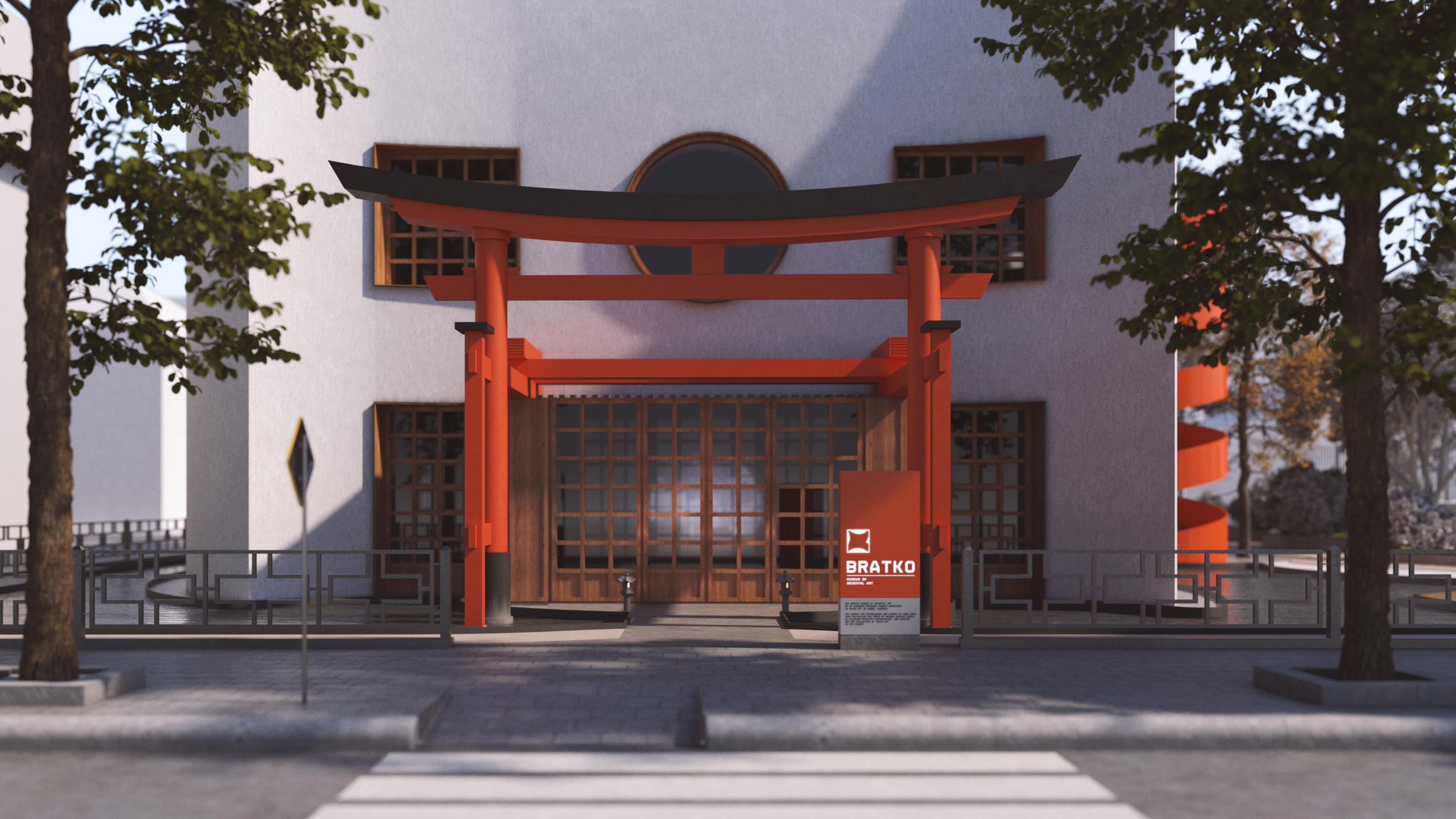
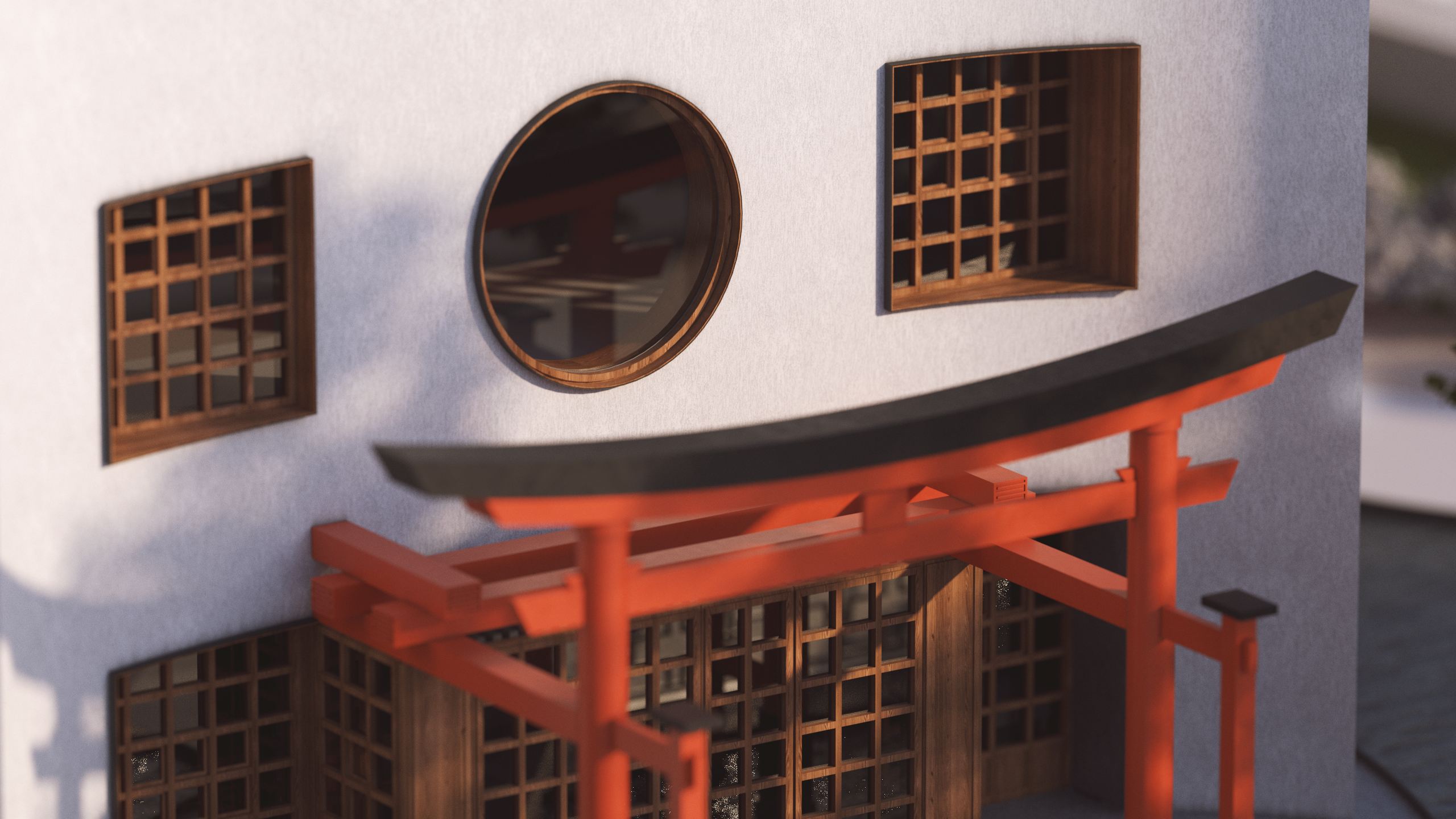
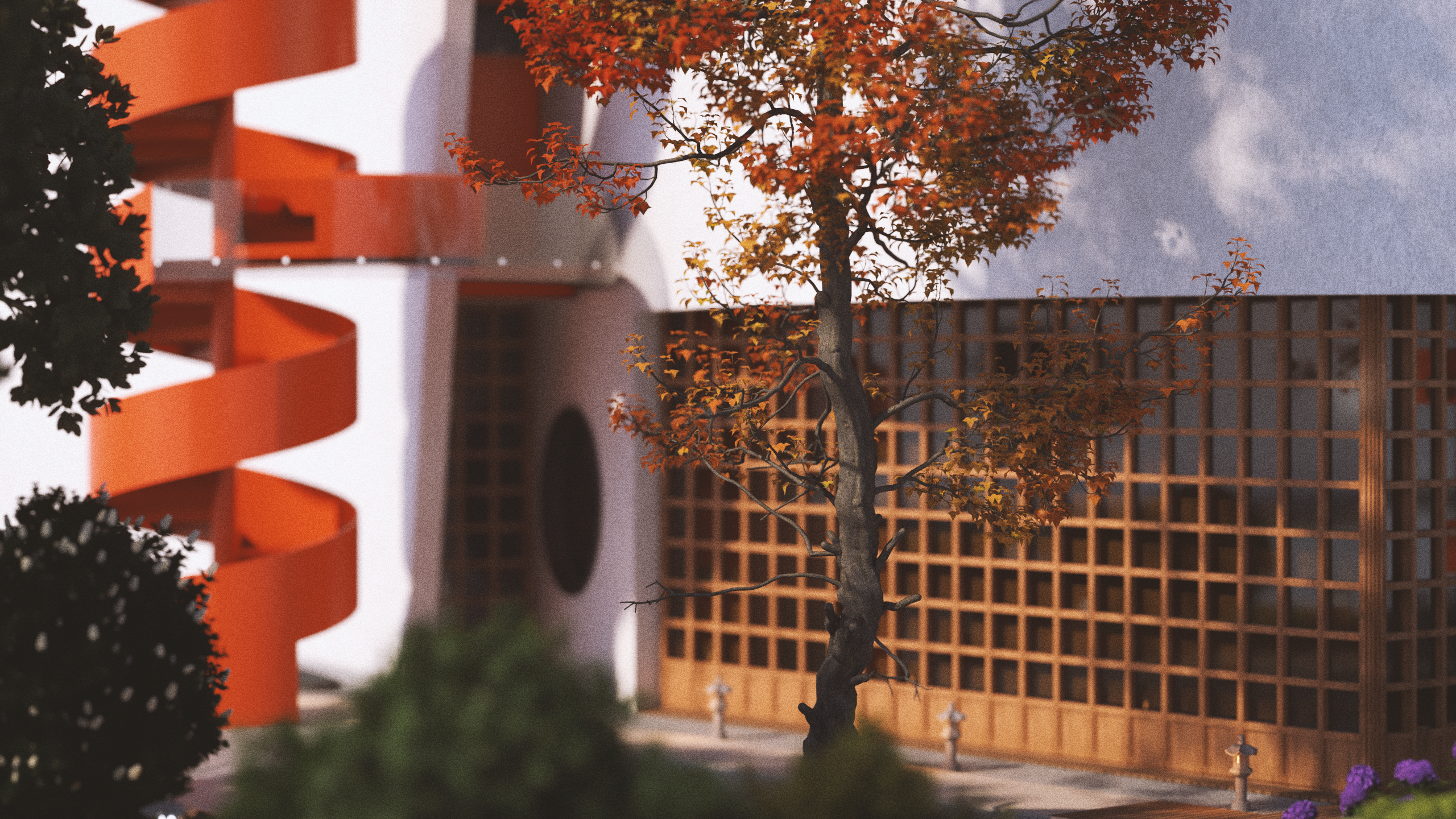
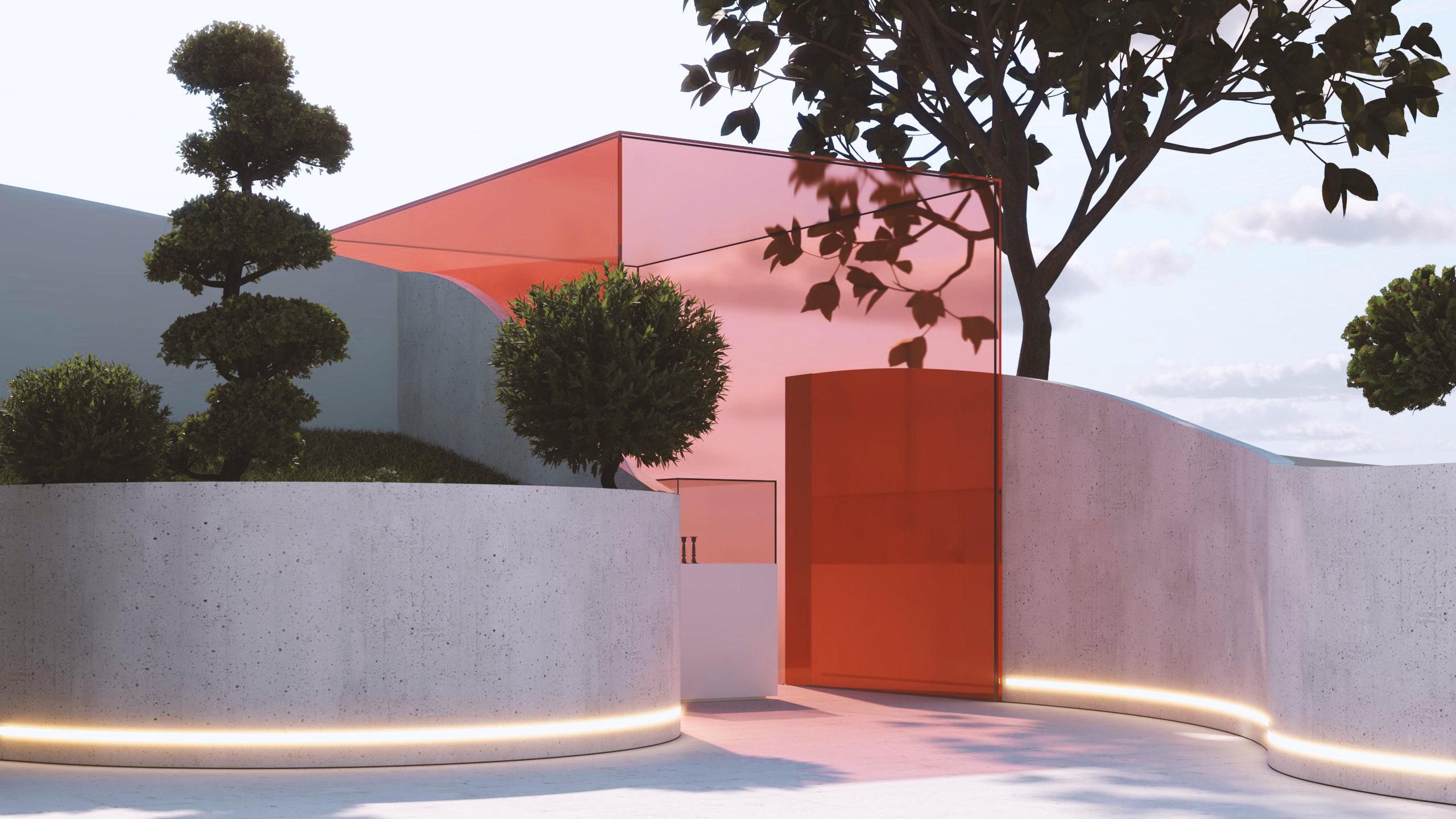
The centerpiece of the exterior is the redesigned Torii gate. We have refined its proportions by removing non-essential elements to restore its clean, symbolic power. Finished in a striking traditional red, the gate acts as a "cultural portal" between Albania and the Orient. This is complemented by a new window system featuring natural wood framing, inspired by Japanese shoji screens, which brings warmth and a rhythmic texture to the building’s facade.
The Landscape: A Living Zen Garden
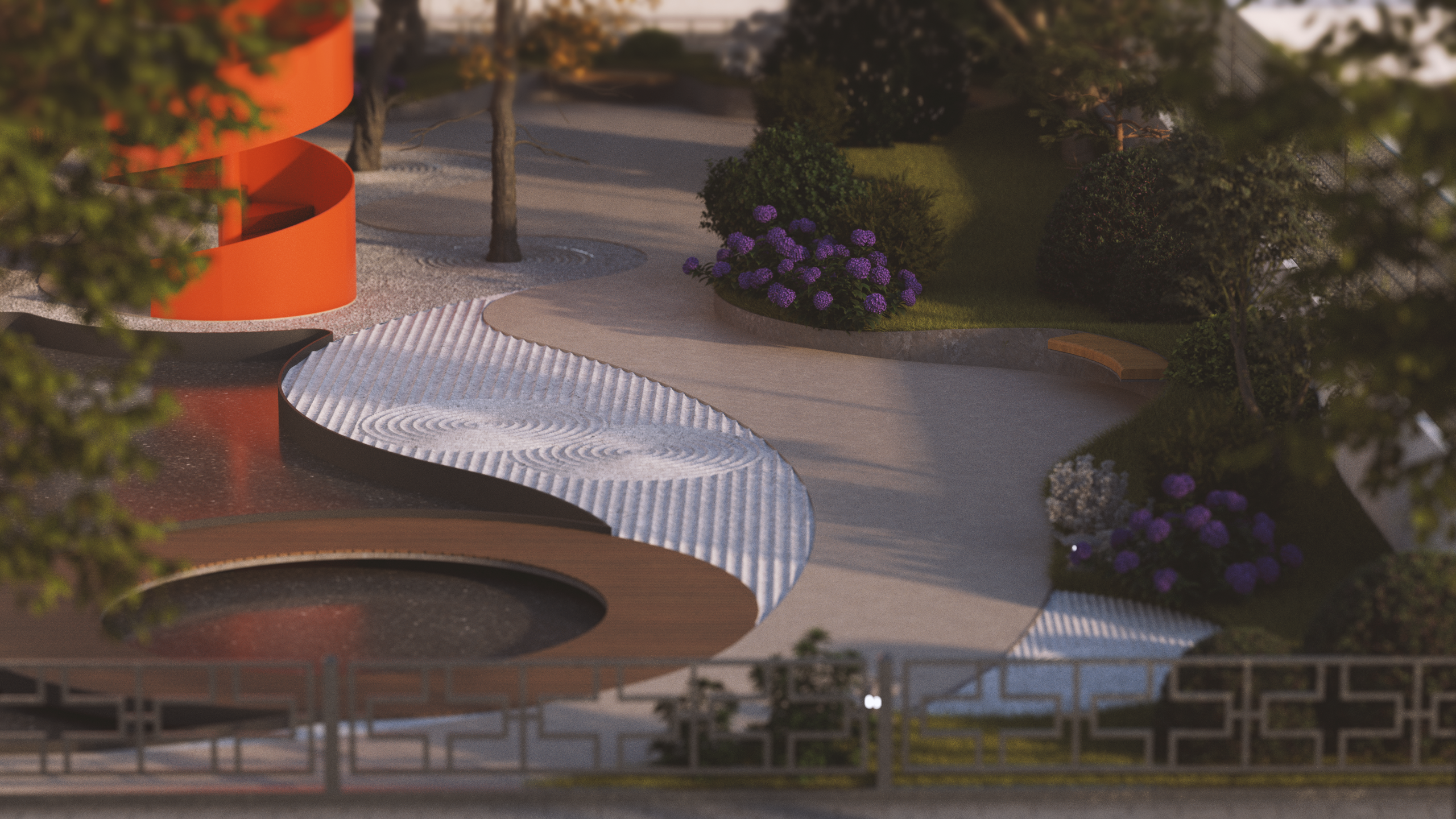
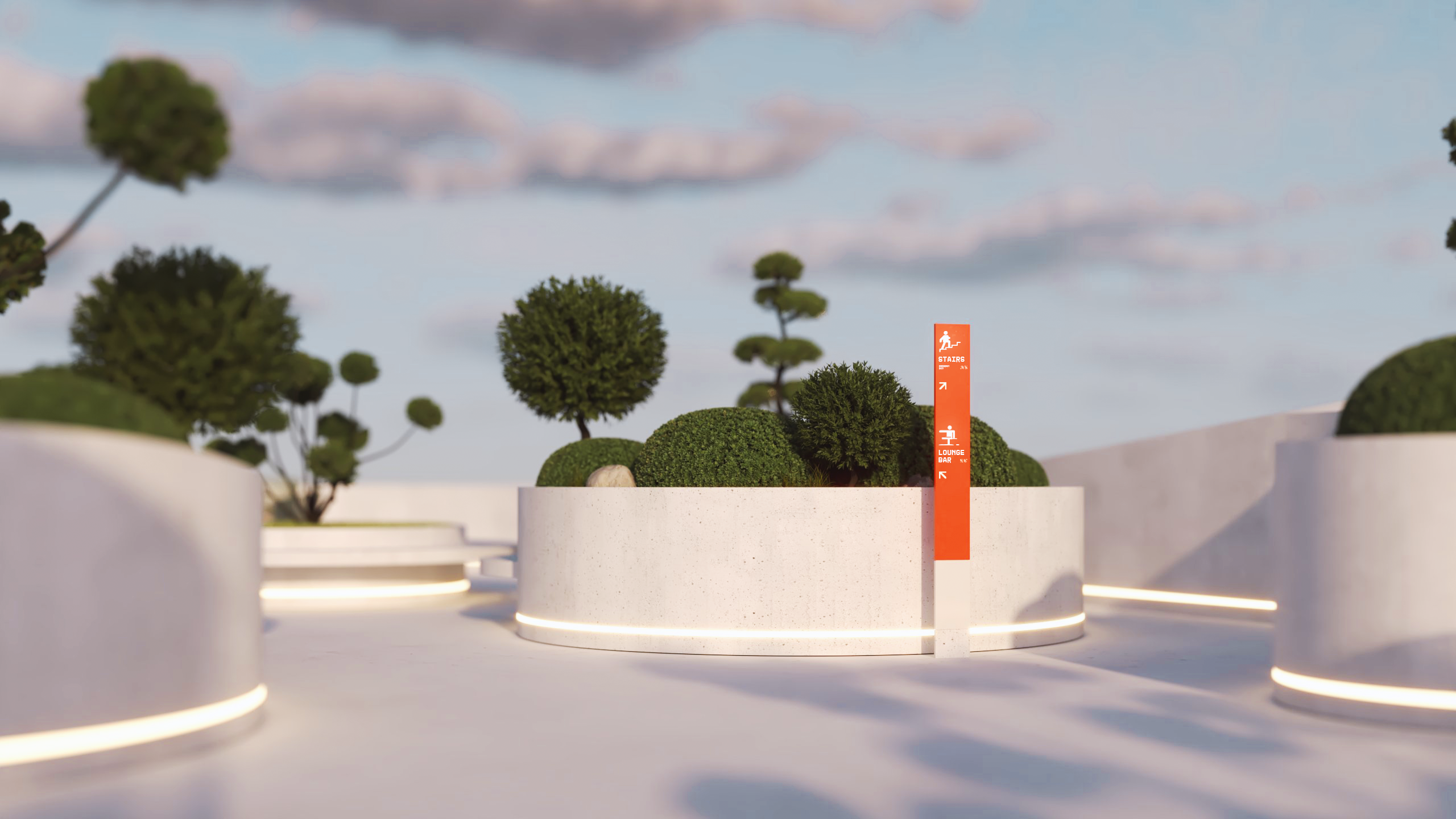
Our masterplan extends the museum’s experience into the surrounding landscape, transforming the outdoor area into a contemplative Zen Garden. This space is designed as a sanctuary of stone, water, and greenery. By incorporating stone lanterns, water features, and winding pathways, we have created a peaceful transition that prepares the visitor for the treasures within, fostering a deep connection between the architecture and the natural world.
Interior Philosophy: Fluidity and Discovery
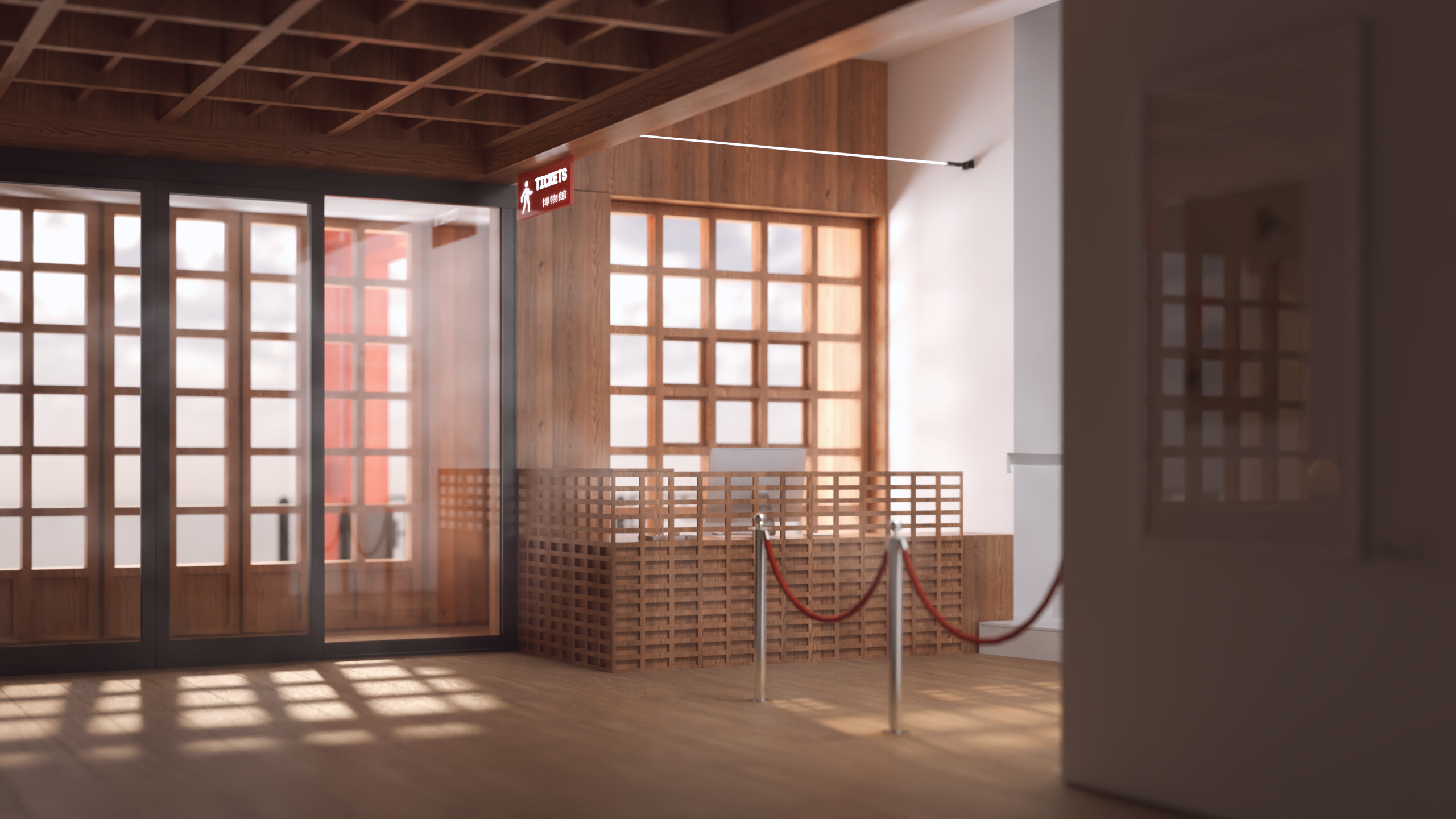
Inside, our studio has reimagined the floor plan to eliminate rigid, constricted corridors. We have implemented a circular and fluid circulation system that guides visitors intuitively through the space.
- The Ground Floor: Focuses on clear zoning that separates public functions from private administrative areas, ensuring seamless movement.
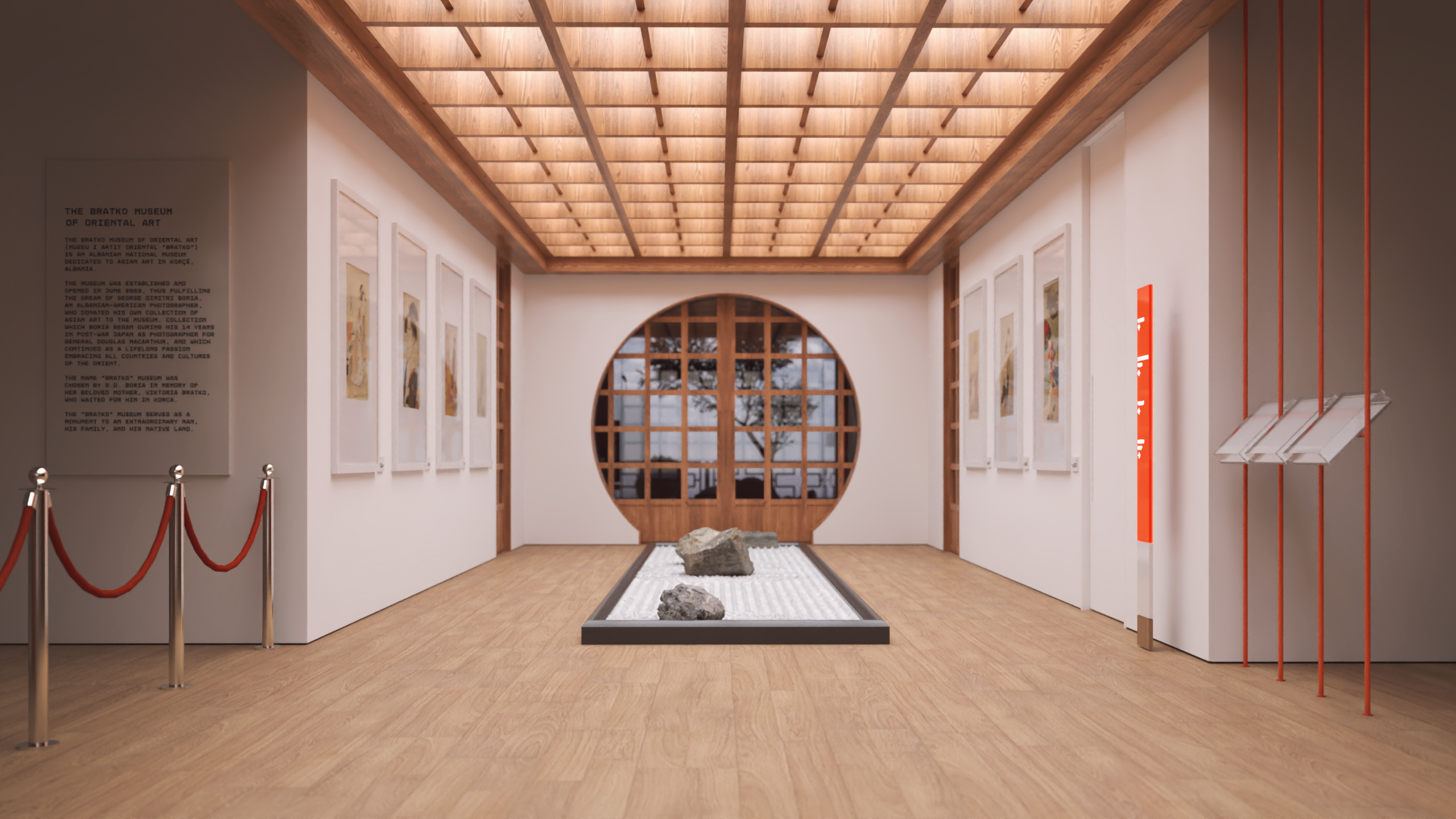
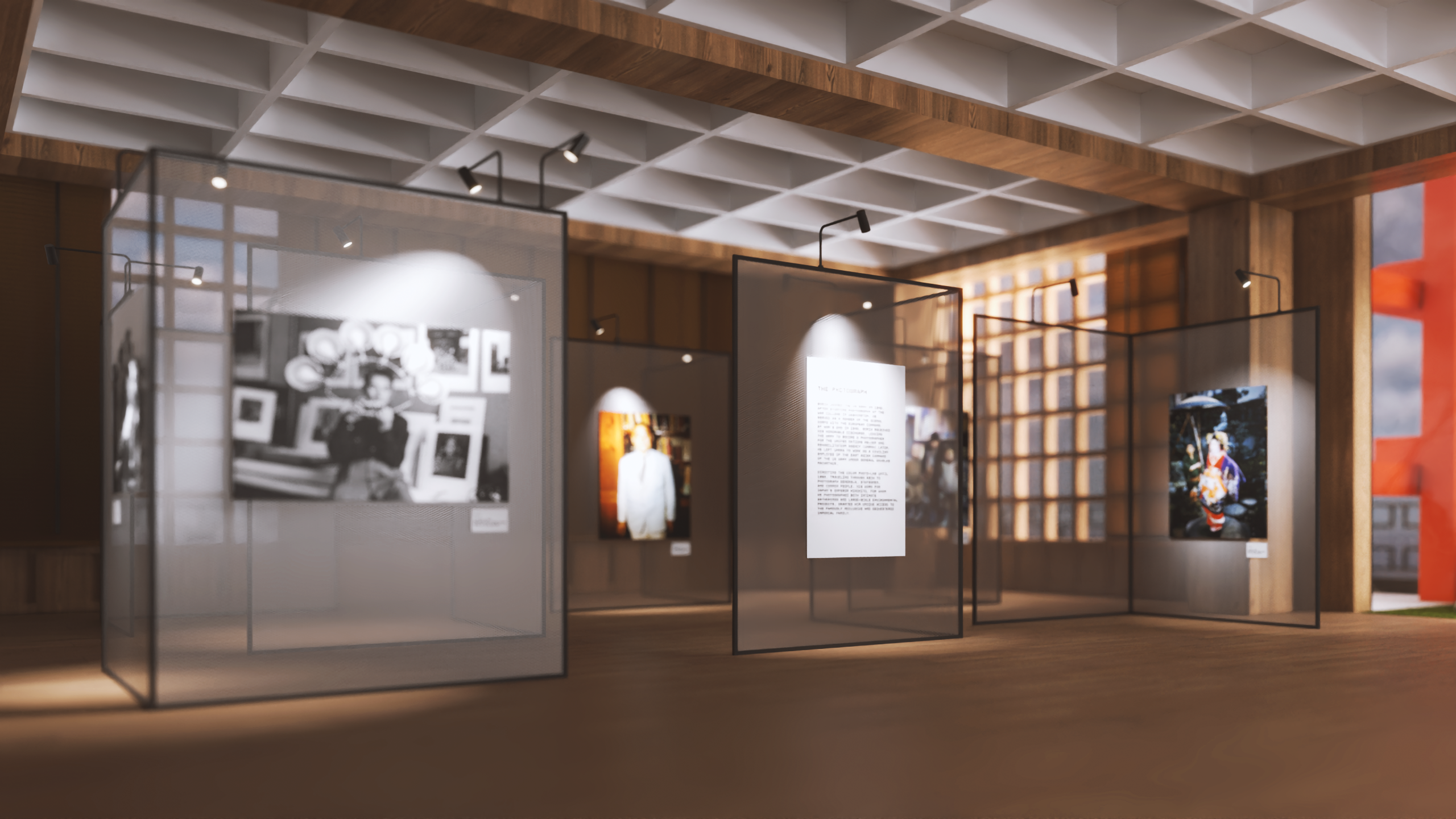
- The First Floor: Dedicated specifically to the art collection of the life journey of Dhimiter Mborja (Boria), the layout is open and immersive, allowing visitors a sense of discovery as they move through the exhibits.
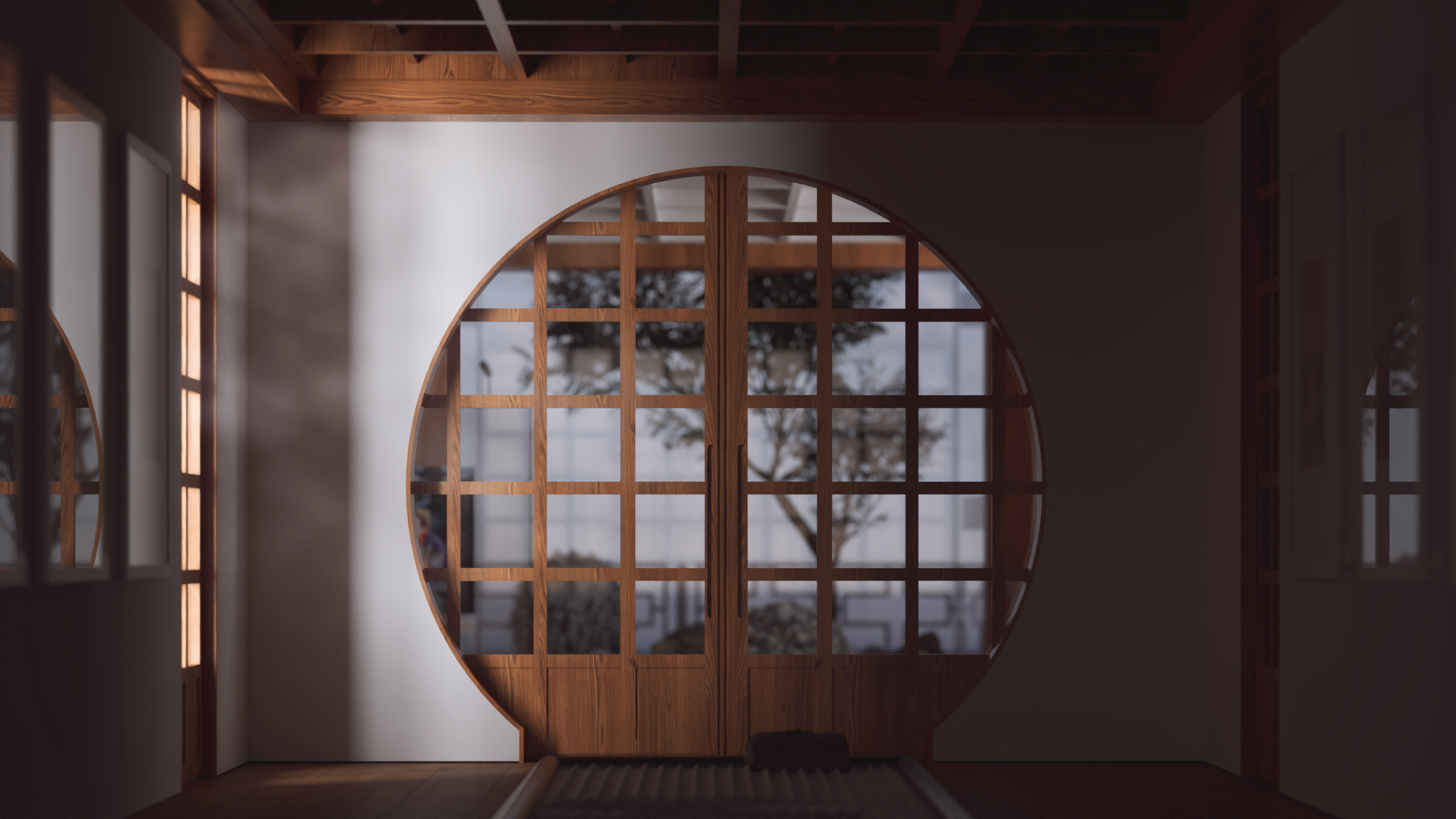
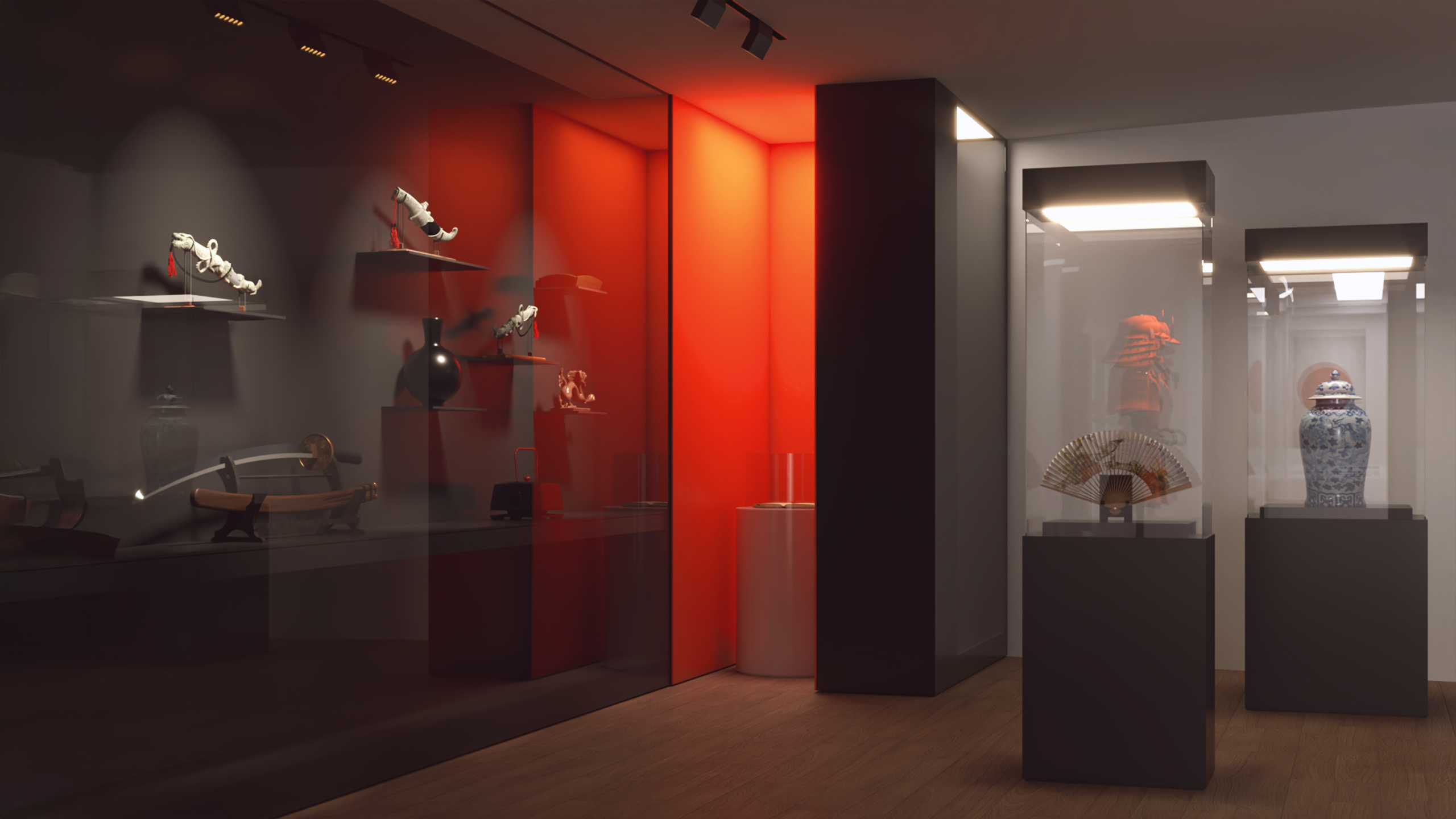
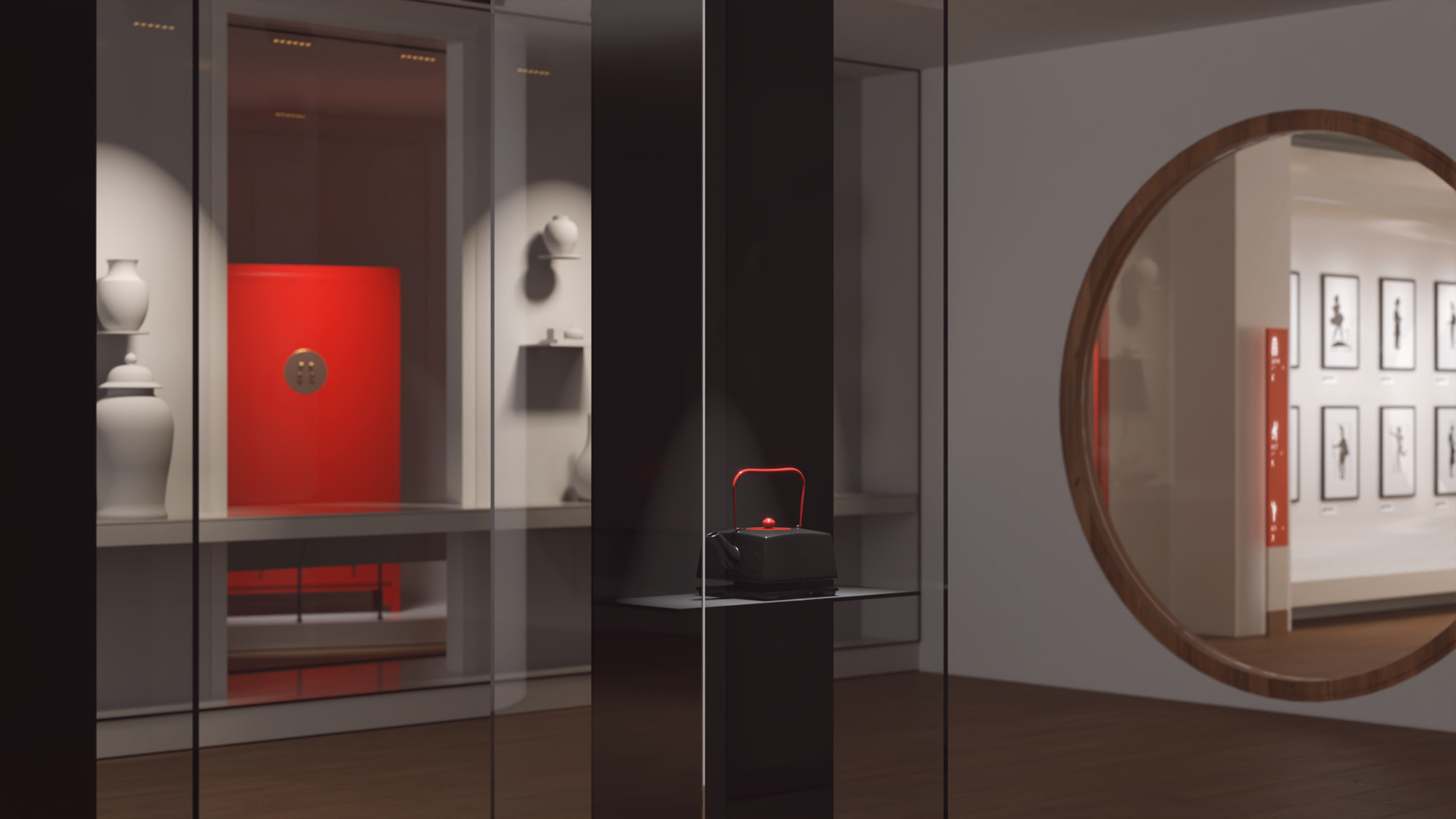
- Architectural Motifs: We have integrated circular door frames and layered wood ceilings to create depth and rhythm, drawing directly from traditional Japanese interior aesthetics.
Innovative Lighting and Display Design
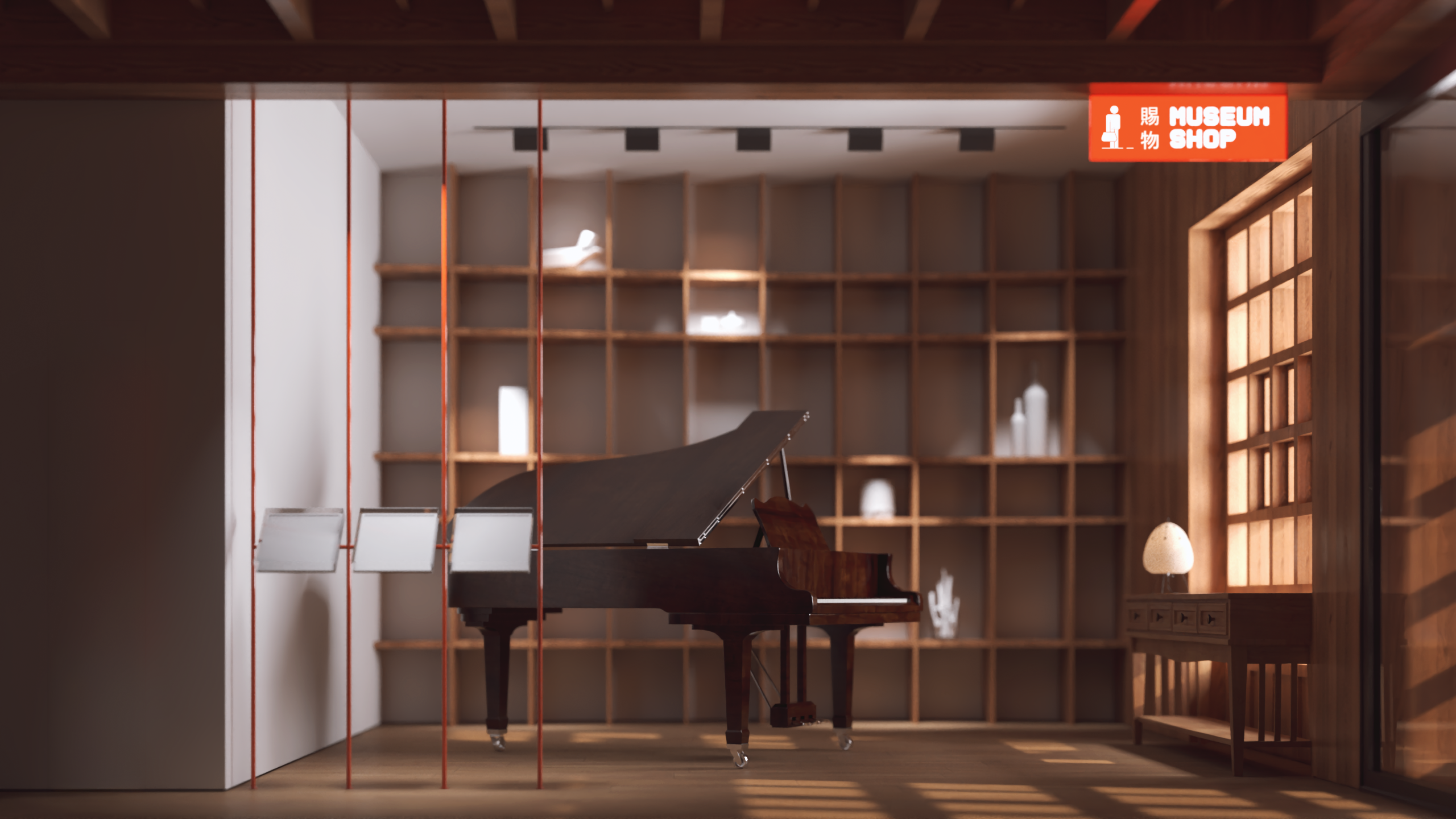
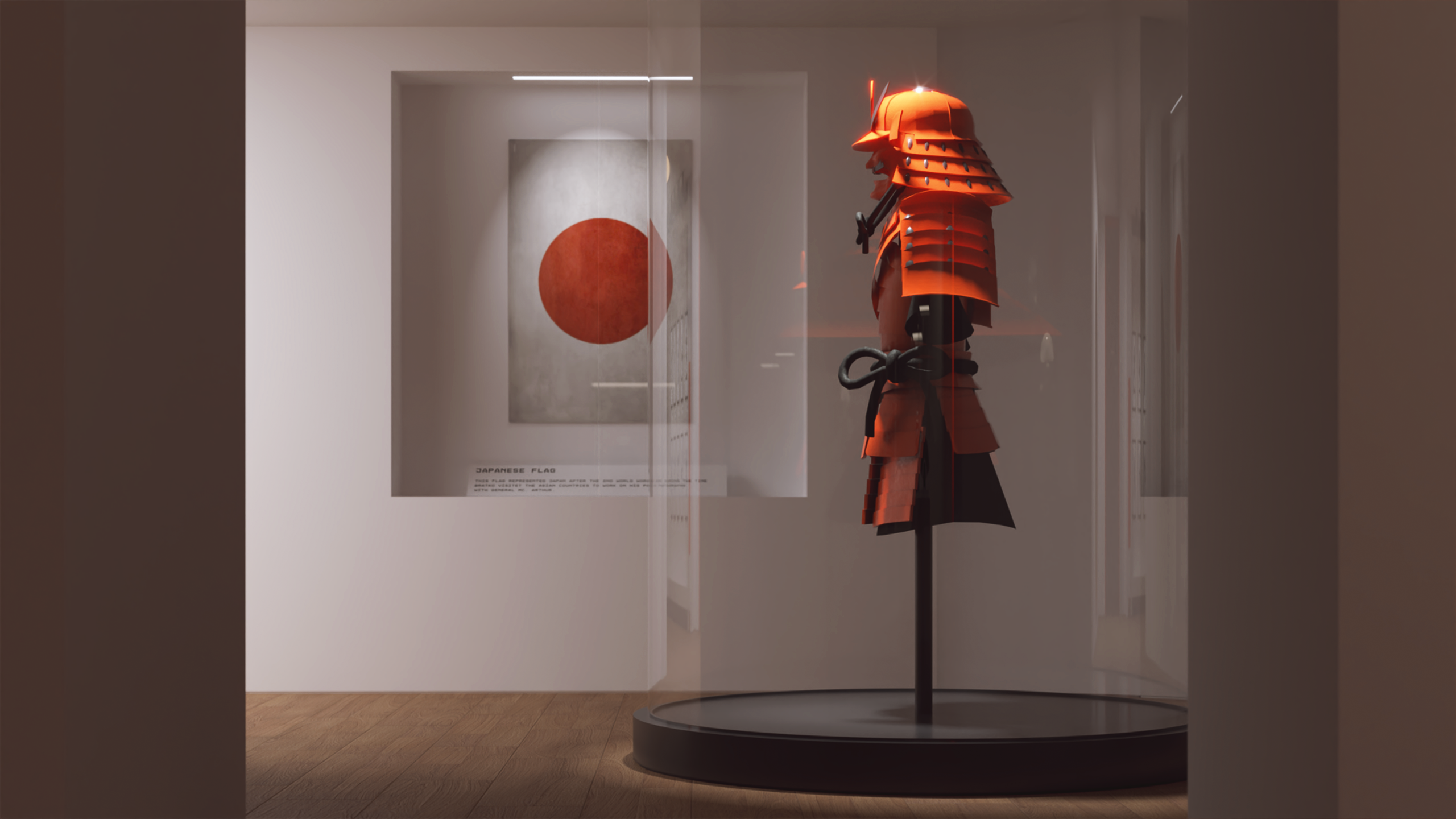
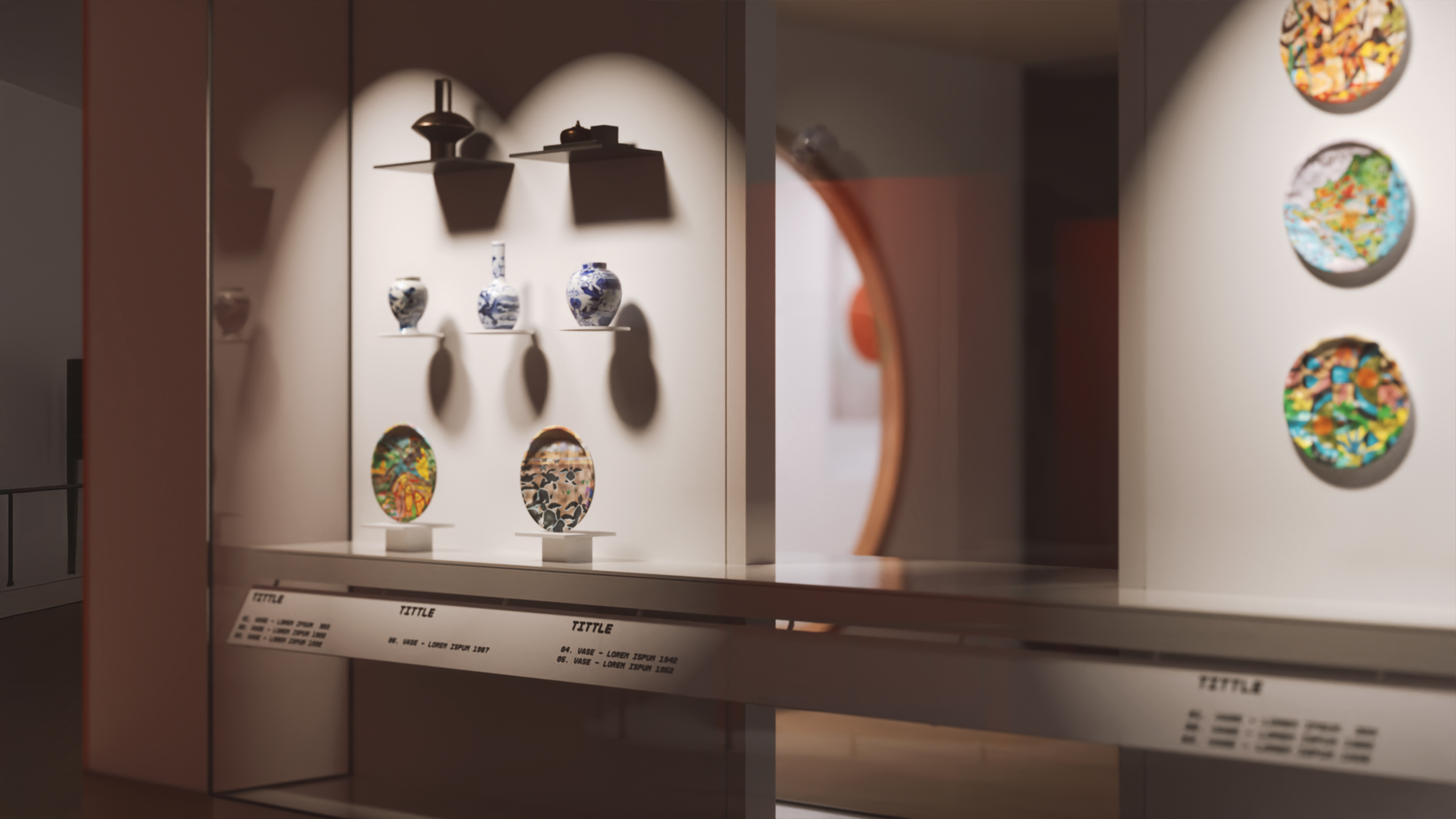
To highlight Boria's vast collection, we have developed a sophisticated lighting concept. Minimalist white ceilings are used to reflect natural light, keeping the galleries feeling airy and bright. We have paired this with an adjustable track lighting system that allows for the precise spotlighting of artifacts, ensuring the museum can adapt to different mediums and temporary installations with ease.
Vertical Connection and Accessibility
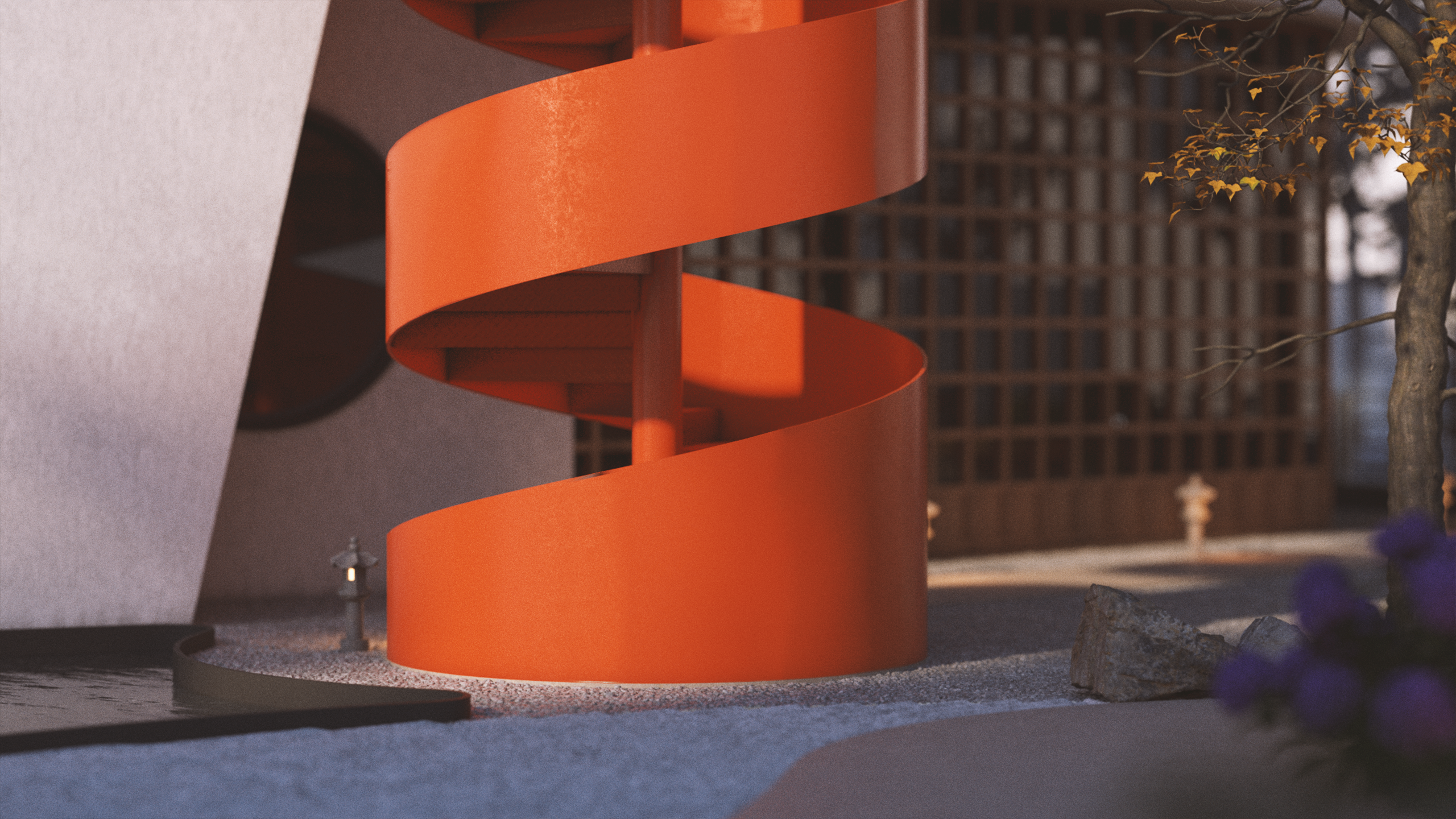
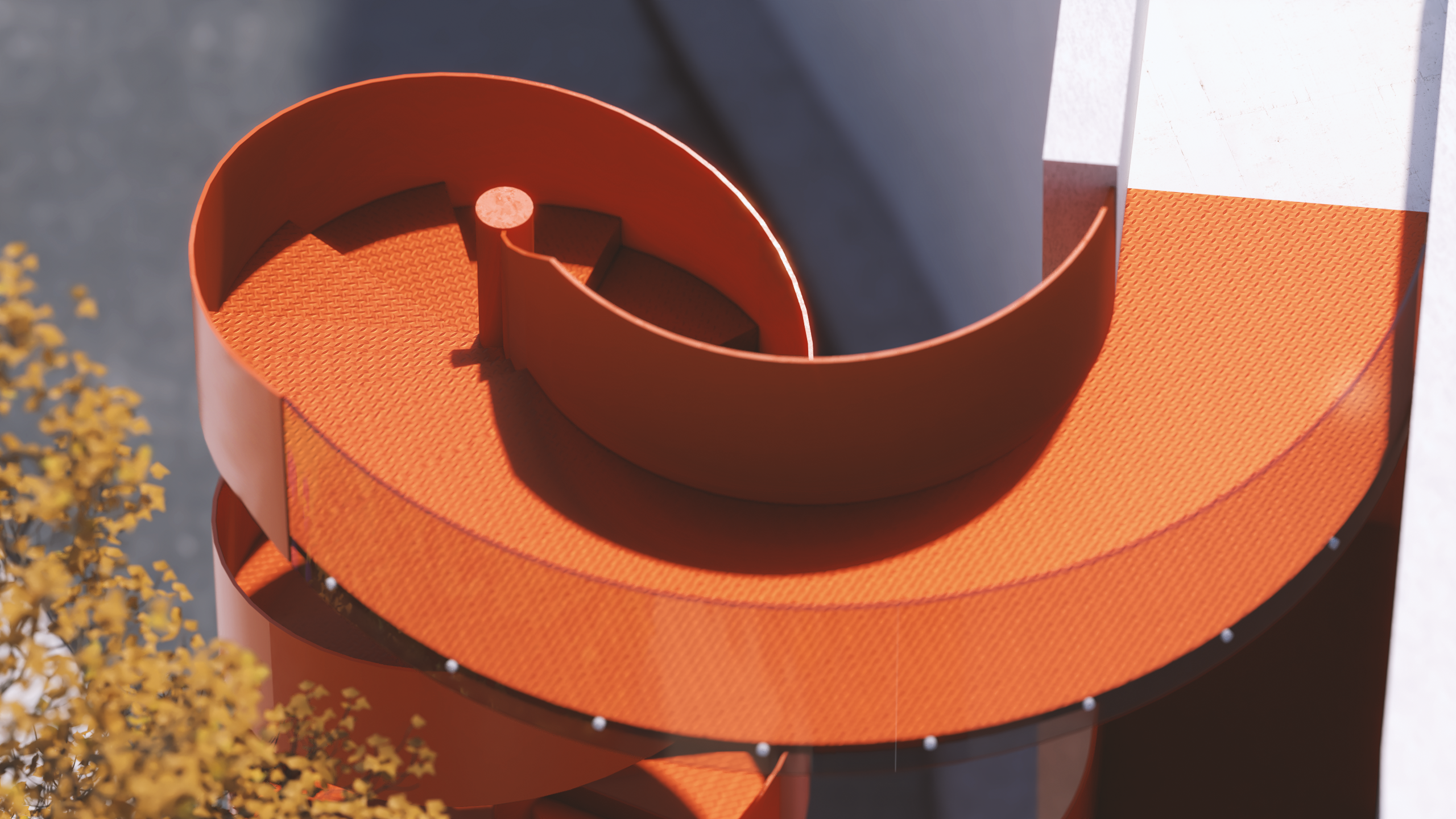
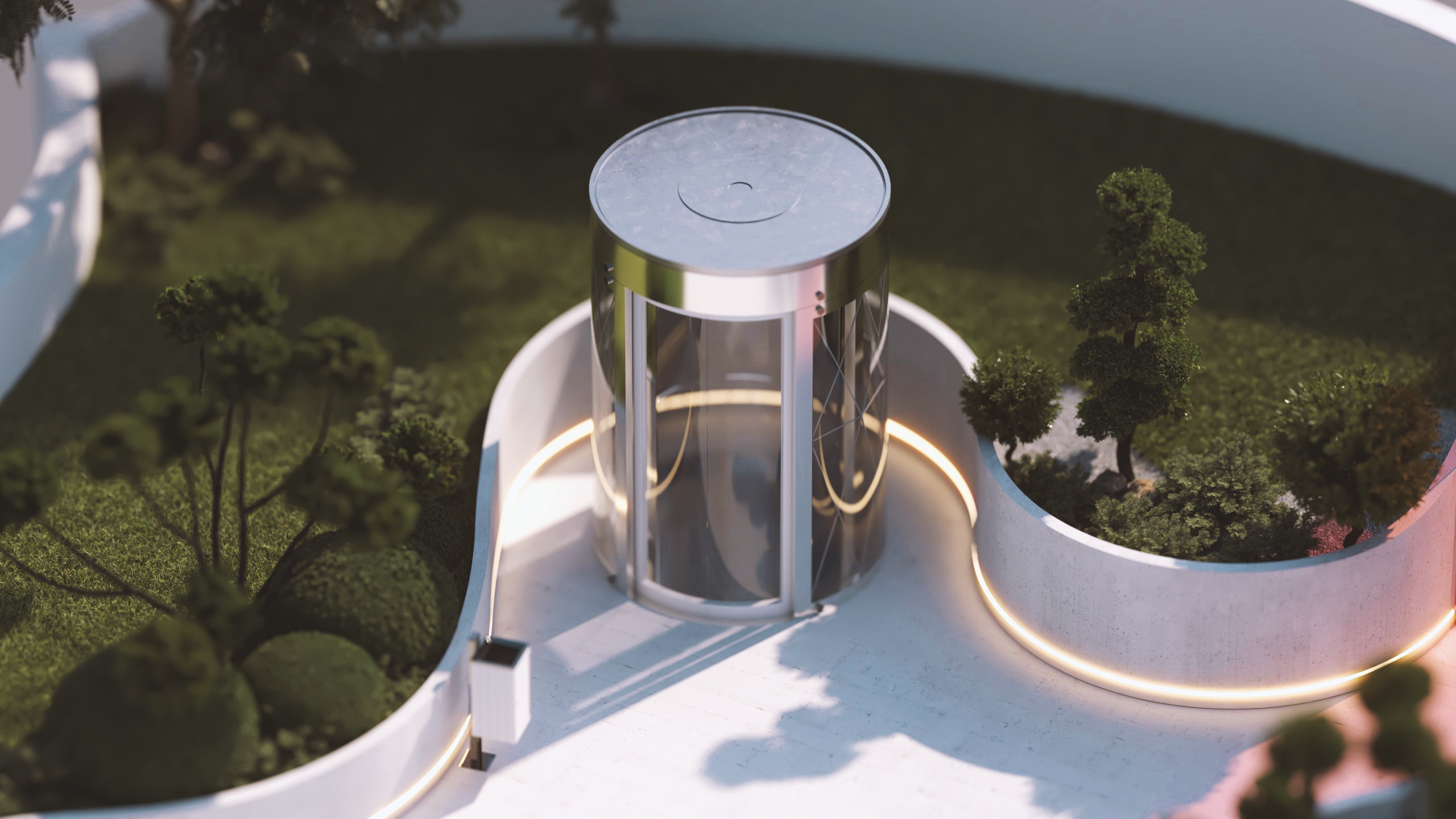
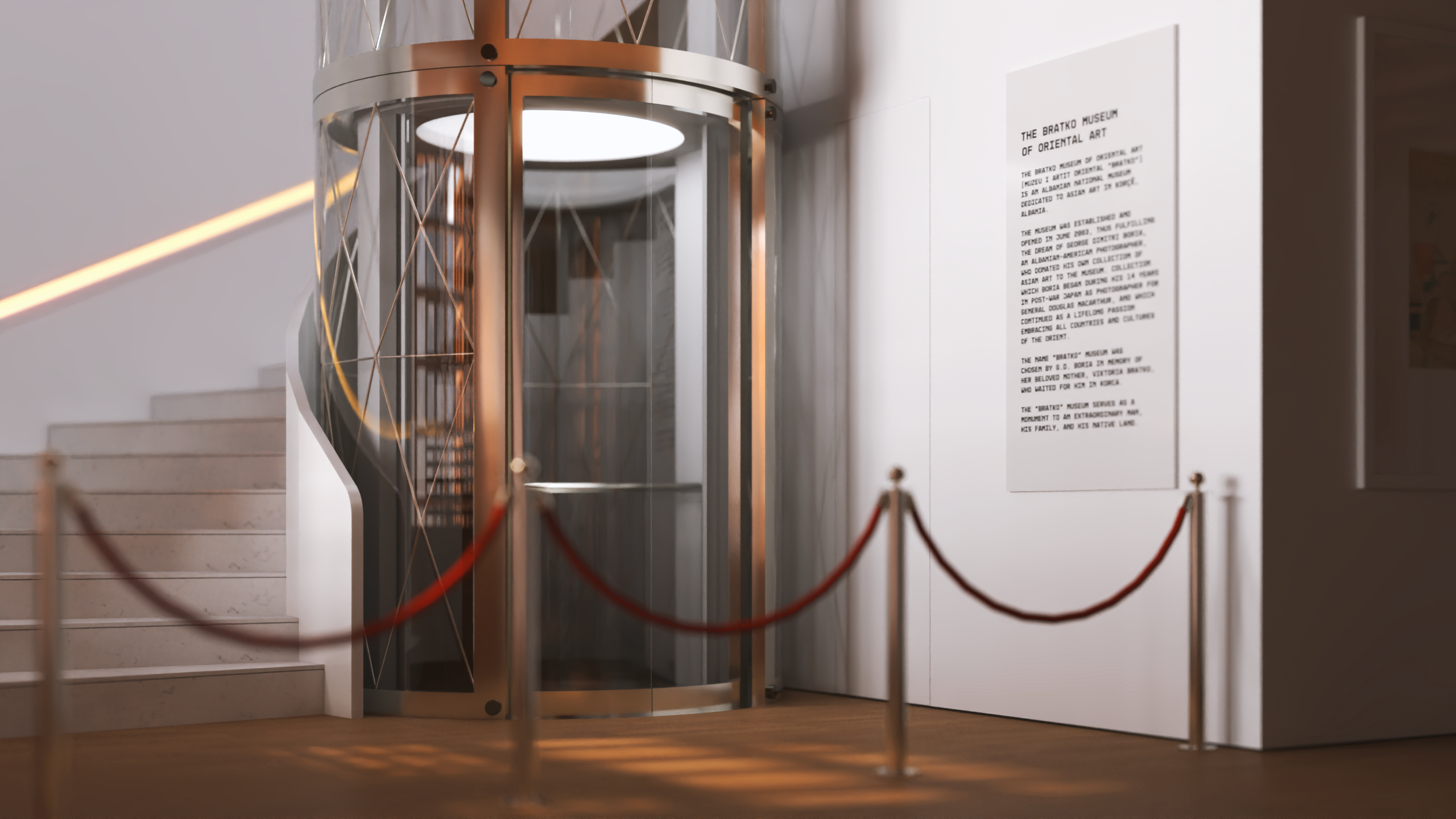
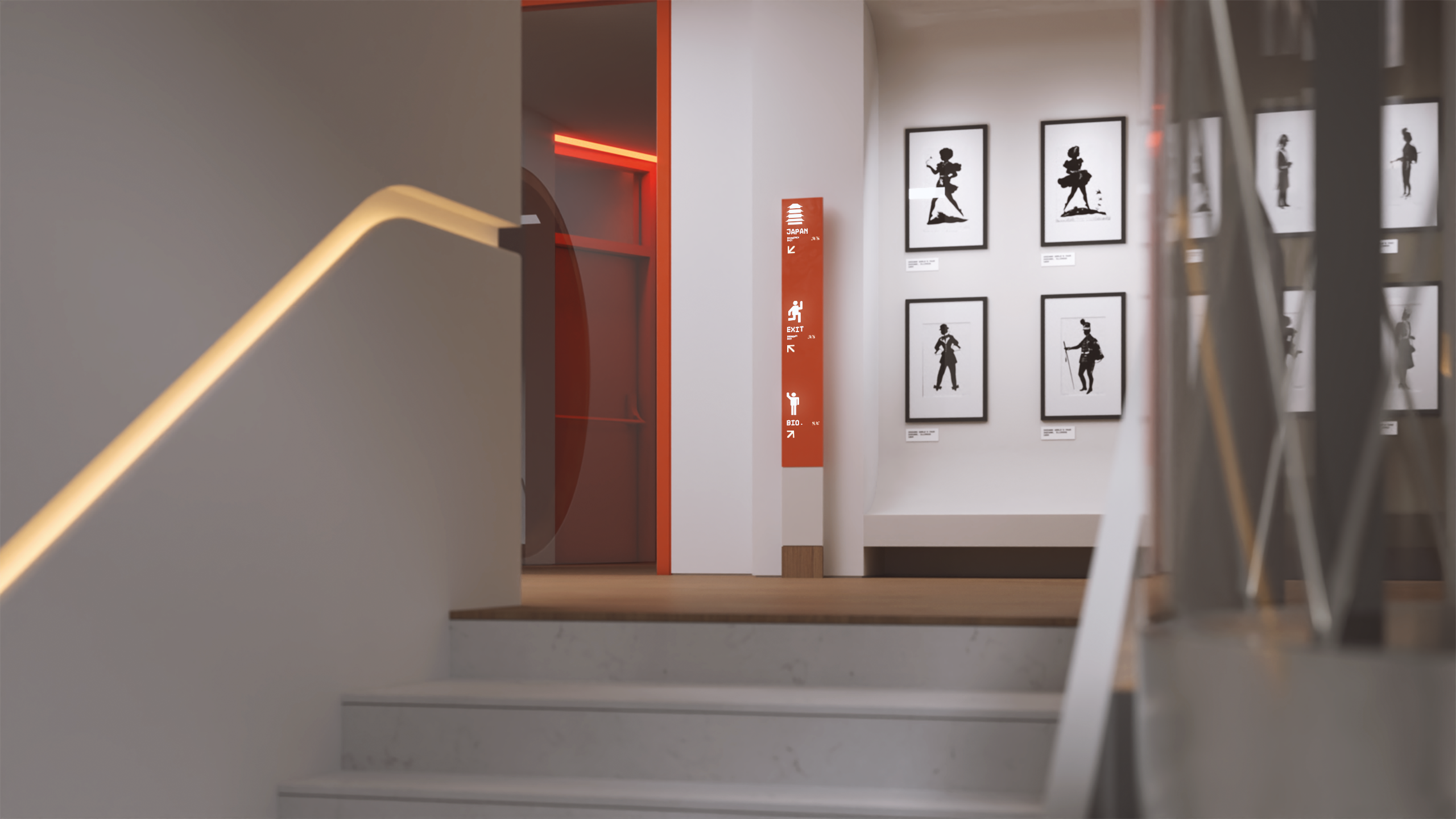
Accessibility is a core pillar of our renovation. We have integrated a modern glass lift and a minimalist, elegant emergency staircase to ensure the museum is inclusive for all visitors. These functional elements are designed with a clean, sophisticated finish that complements the overall architectural elegance of the building.
Major Architectural Interventions
Our studio has focused on three central interventions to redefine the museum’s identity:
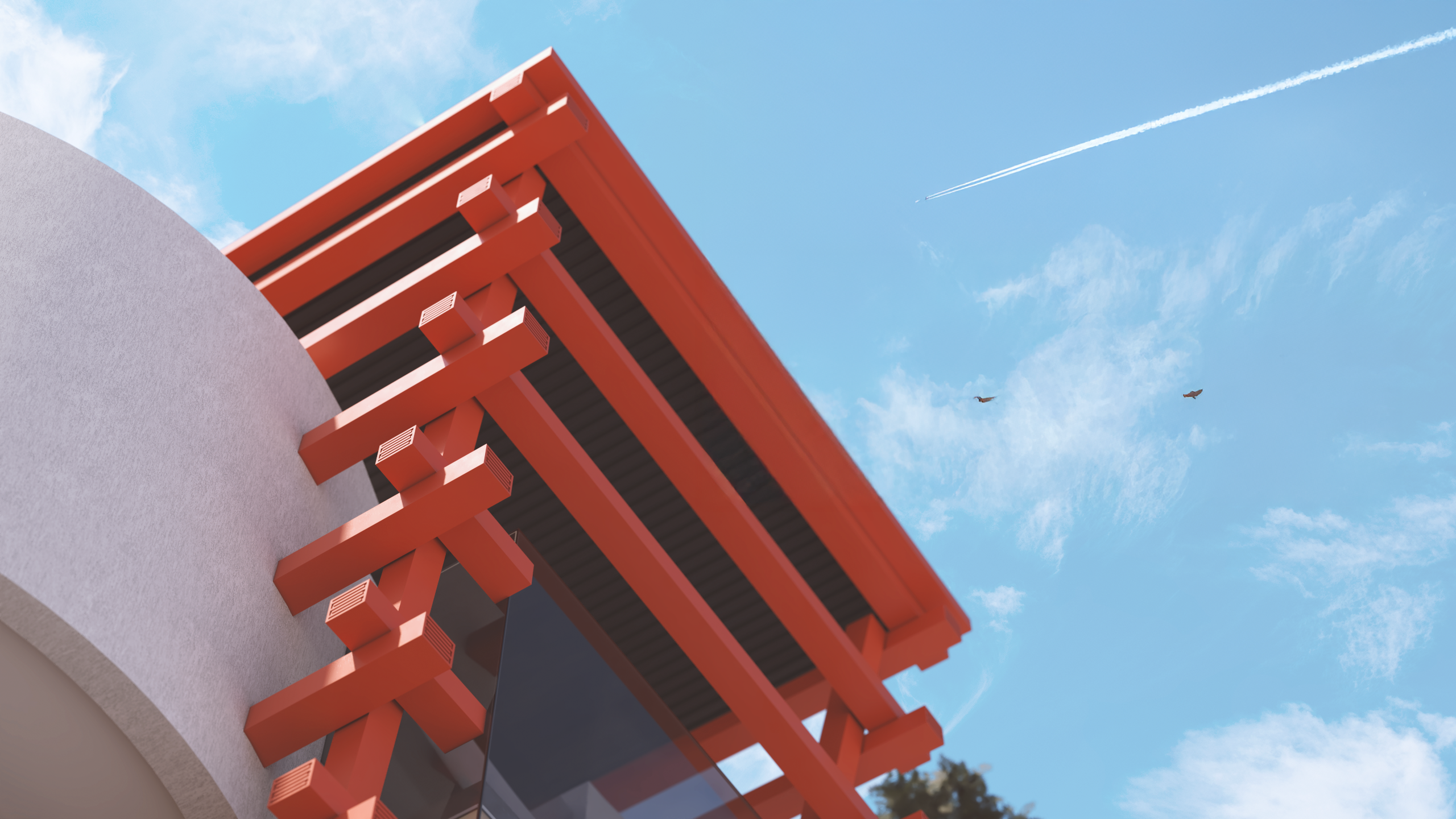
- Symbolic Continuity: The bold red of the Torii gate is echoed throughout the facade, creating a unified visual language.
- The Glass Zen Box: Inspired by the architectural style of the China Pavilion, this transparent structure features integrated Zen gardens on each floor, offering a "breathing space" for reflection.
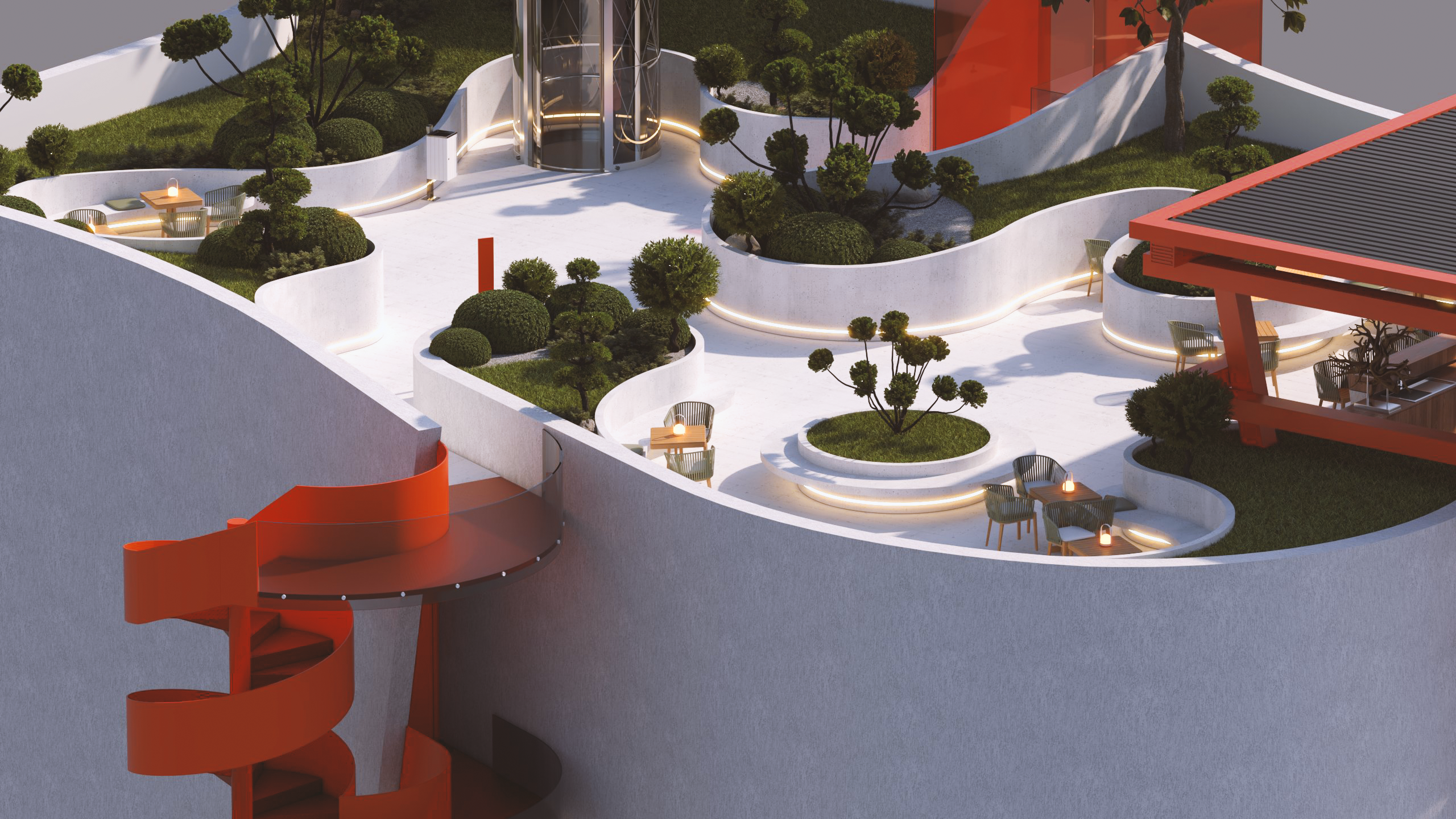
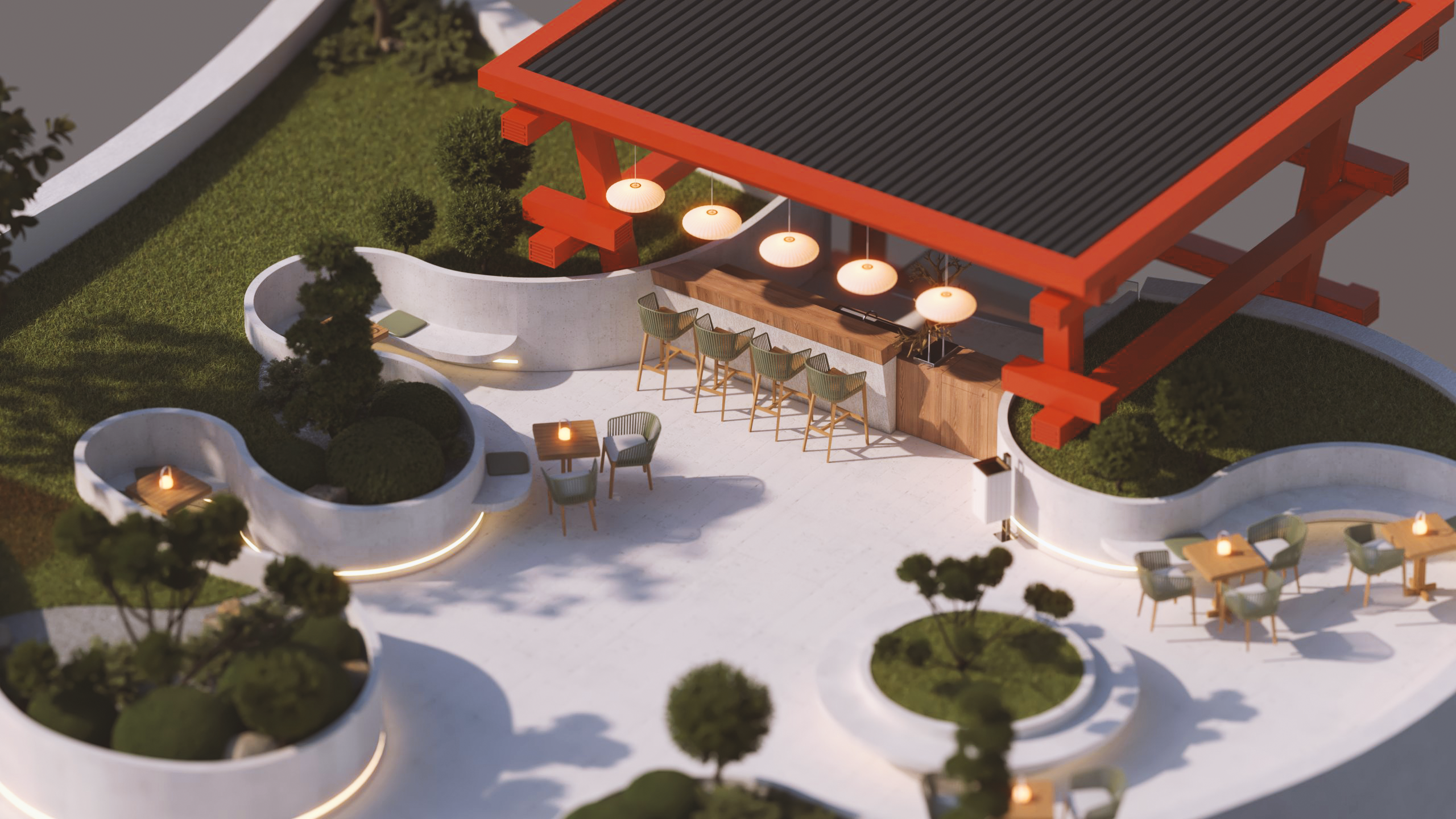
- The Rooftop Sanctuary: We have designed a Japanese-inspired rooftop garden complete with bonsai trees and a modern bar. This dual-purpose space adds a business dimension to the project, allowing the museum to host social events and community gatherings in a serene, elevated setting.
A Legacy Reimagined
The renovation of the Bratko Museum is more than a structural update; it is a profound act of cultural preservation. By blending the avant-garde spirit of George Dimitri Boria’s life with the precision of contemporary Japanese-inspired architecture, our studio has created a space where history and modernity coexist. This project honors the emotional weight of Boria’s gift, a museum built from the heart and named for a mother’s devotion, while elevating it to meet international standards of design and accessibility.
Through the symbolic power of the red Torii gate, the tranquility of the Zen gardens, and the fluid, light-filled galleries, the museum once again becomes a vibrant bridge between the city of Korça and the Far East. We believe this revitalized sanctuary will not only protect Boria’s priceless collection but will also serve as a dynamic cultural hub, inspiring future generations to explore the world just as Boria did nearly a century ago.
Autori

Vendndodhja
Rruga Avni Rustemi 57, 7000 Korçë, Albania