
 Shqip
ShqipTë dhëna mbi projektin
-
Studio
INSTITUTI KOMBËTAR I TRASHËGIMISË KULTURORE
-
Faqja e Studio
-
Arkitekti
Artila Vavako, Lisjan Tusha, Brixhita Deda, Kledia Kore
-
Faqja e Arkitektit
-
Tipologjia
Cultural, Educational, Residential Architecture
-
Statusi
In construction
-
Viti i ndërtimit
2024-2026
-
Sipërfaqja
First floor: 103 m2; Second floor: 179.5 m2
-
Kate
2
-
Ekipi
Artila Vavako, Lisjan Tusha, Brixhita Deda, Kledia Kore
Përshkrimi
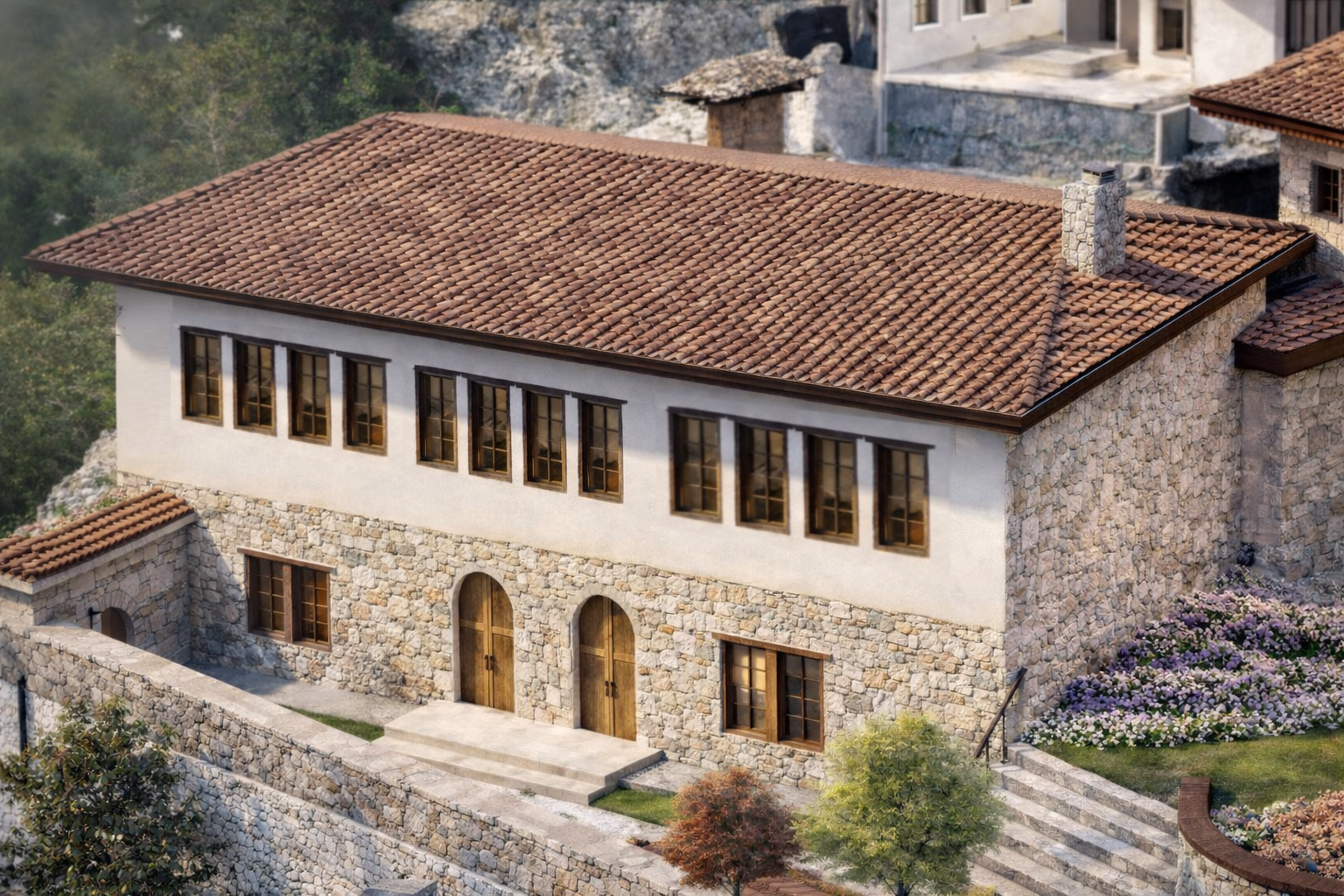
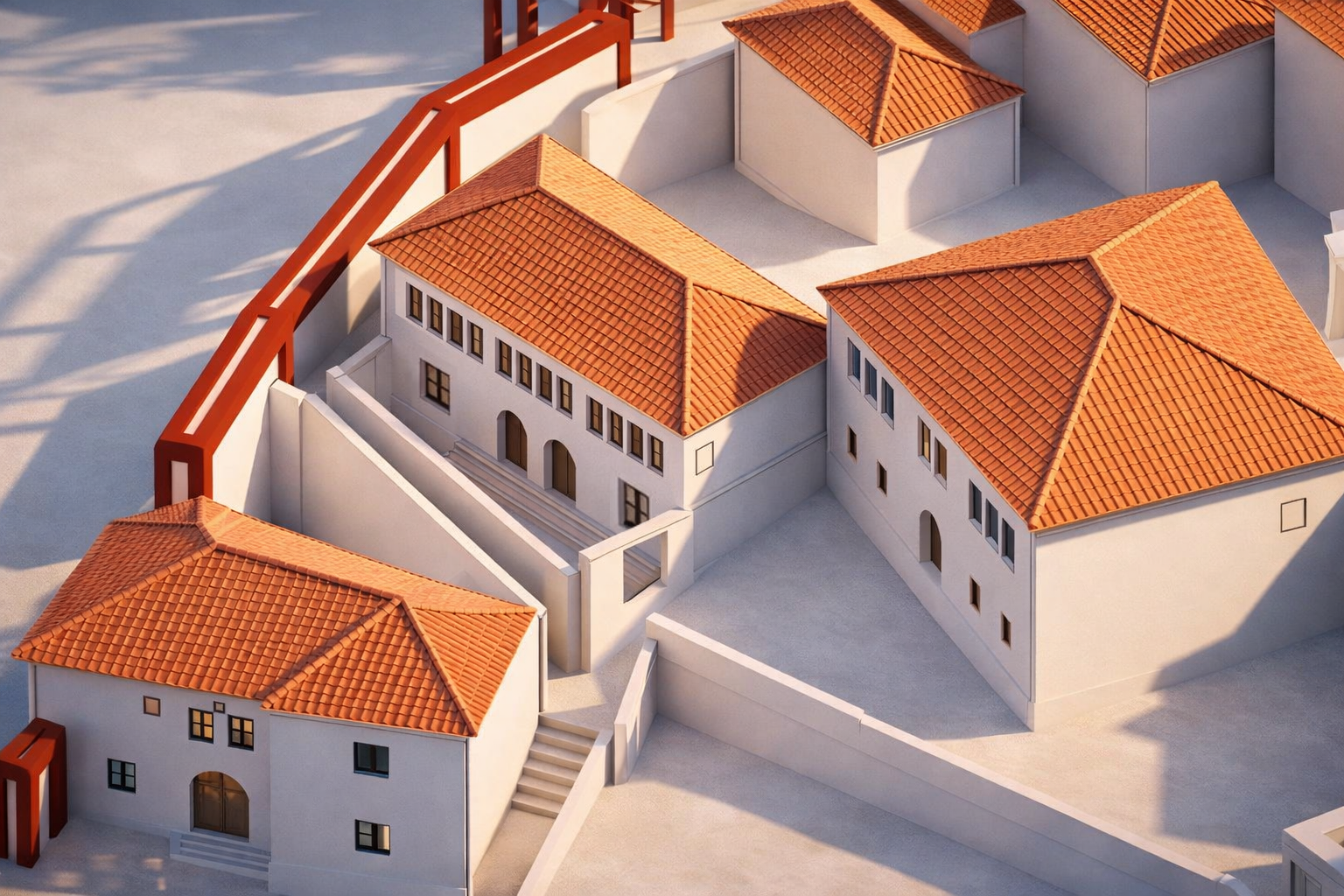
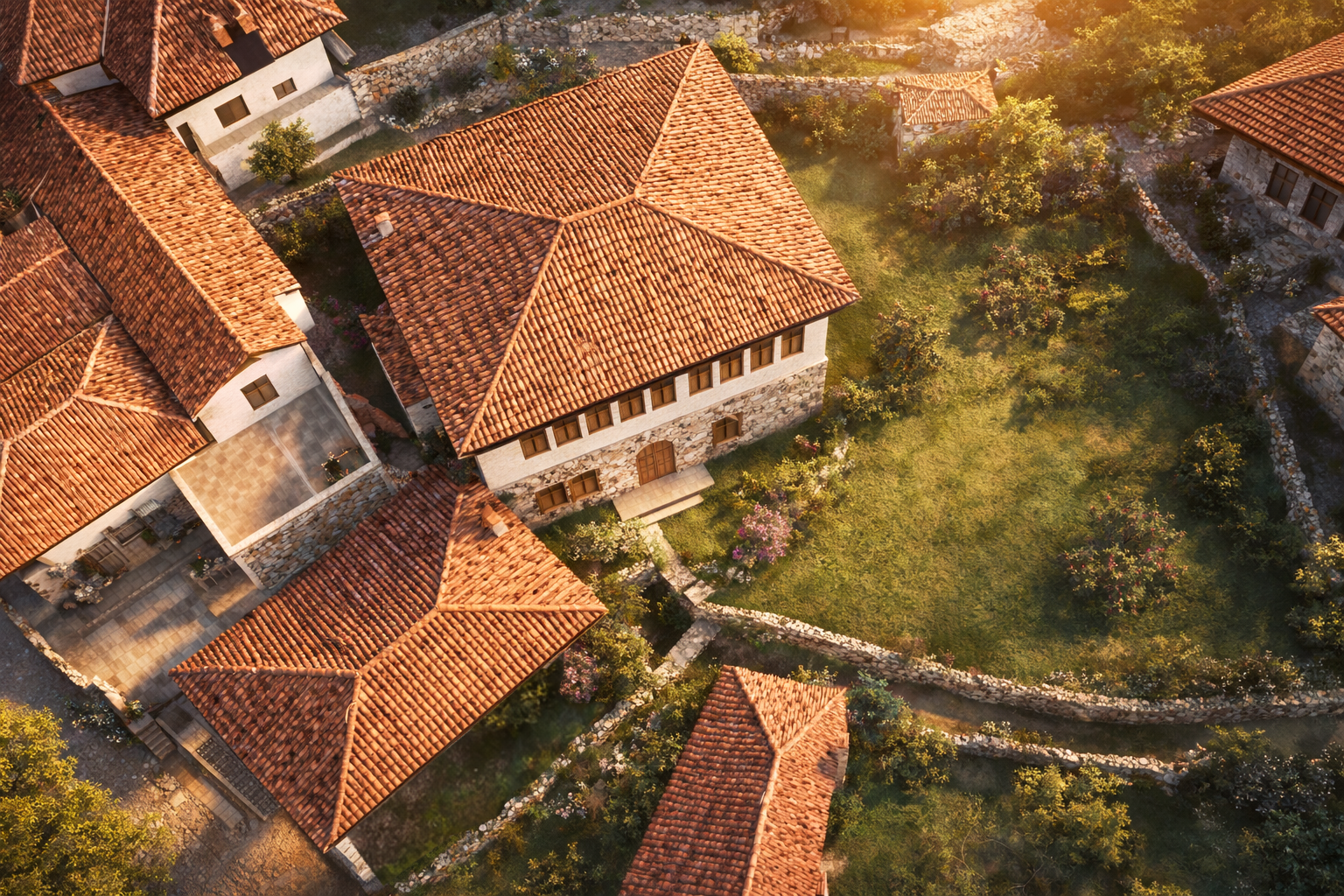
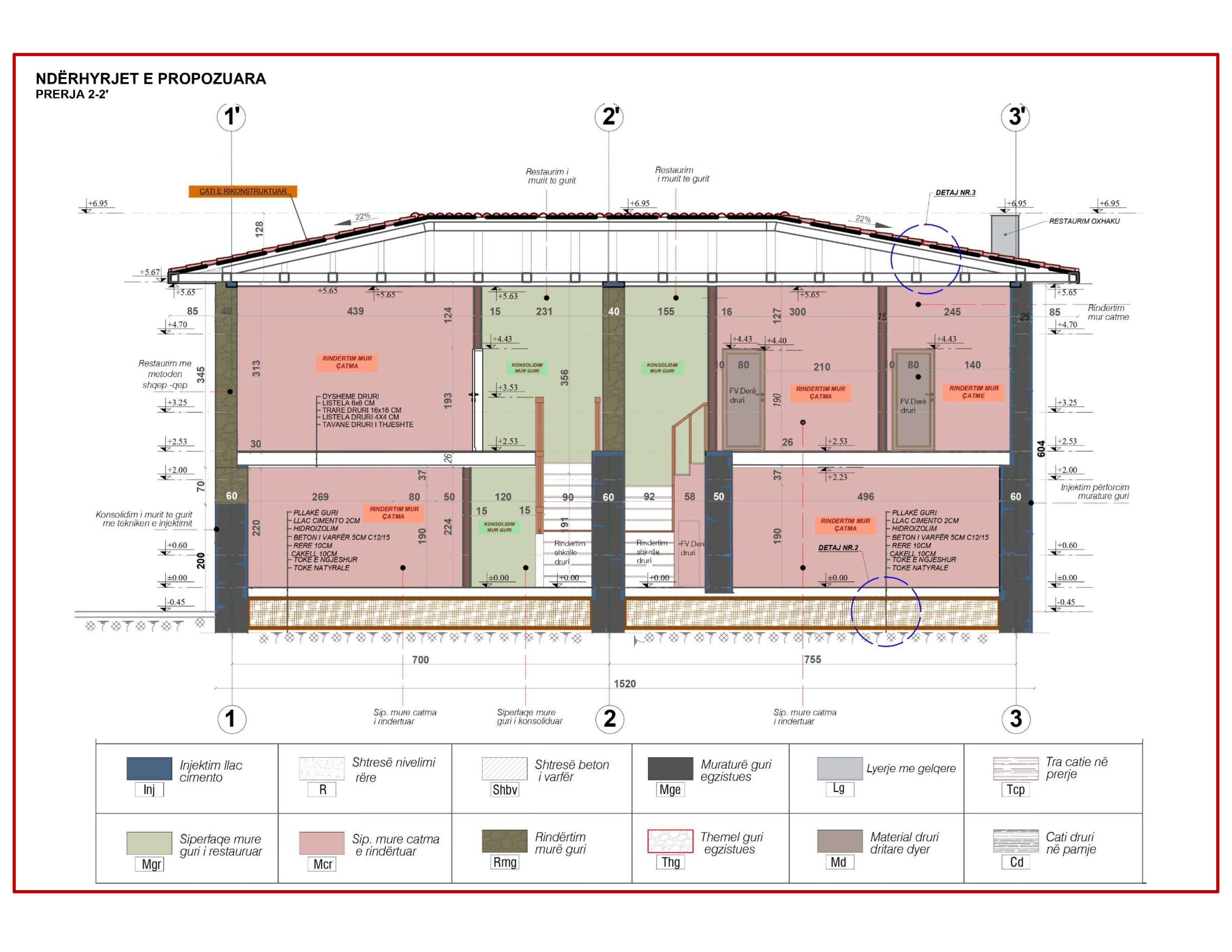
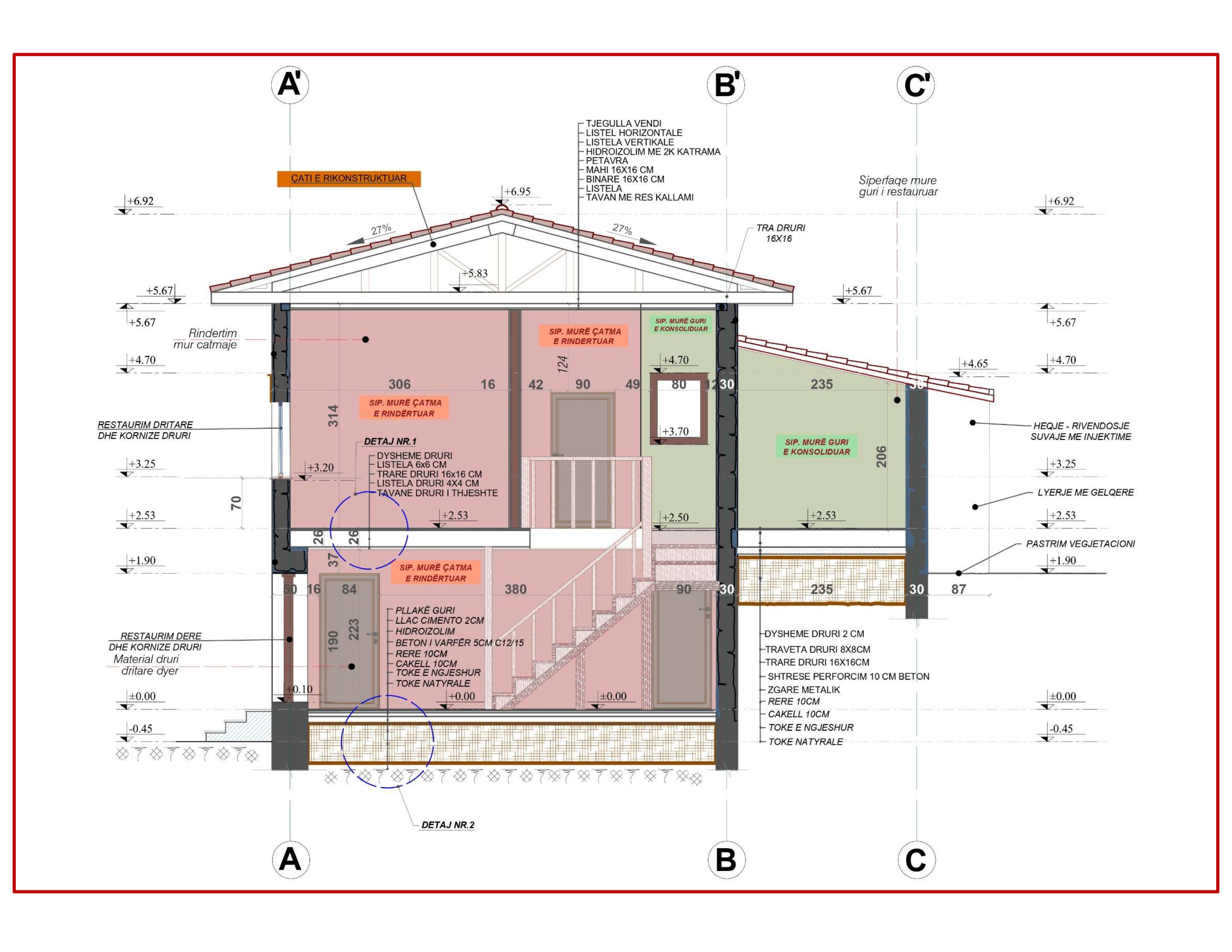
Based on the assessment of data and information obtained through on-site inspection and a review of relevant literature concerning the use of materials and construction techniques in traditional dwellings in Krujë, as well as the current level of degradation of House No. 54 caused by various factors, the following emergency conservation and restoration interventions are proposed:
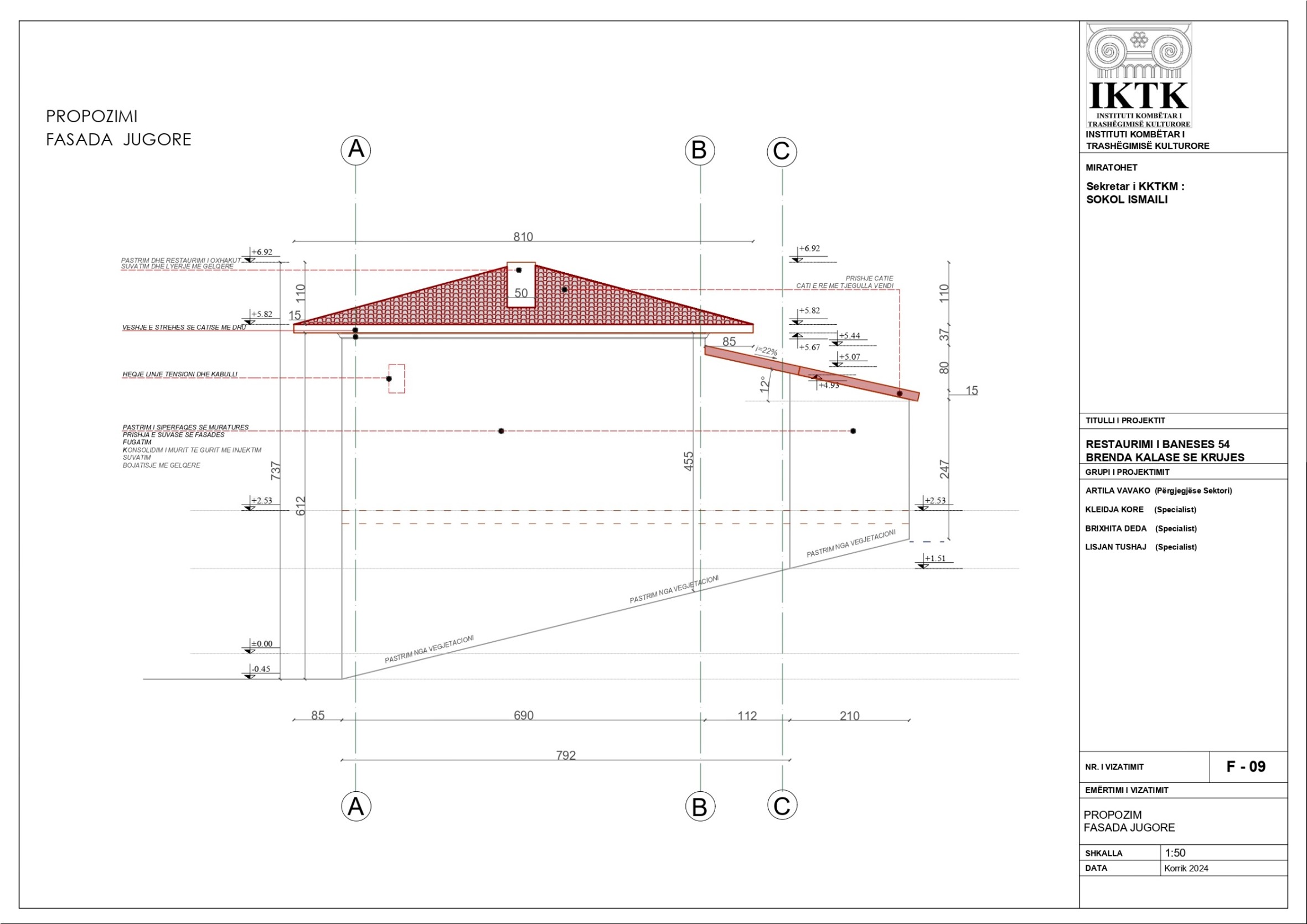
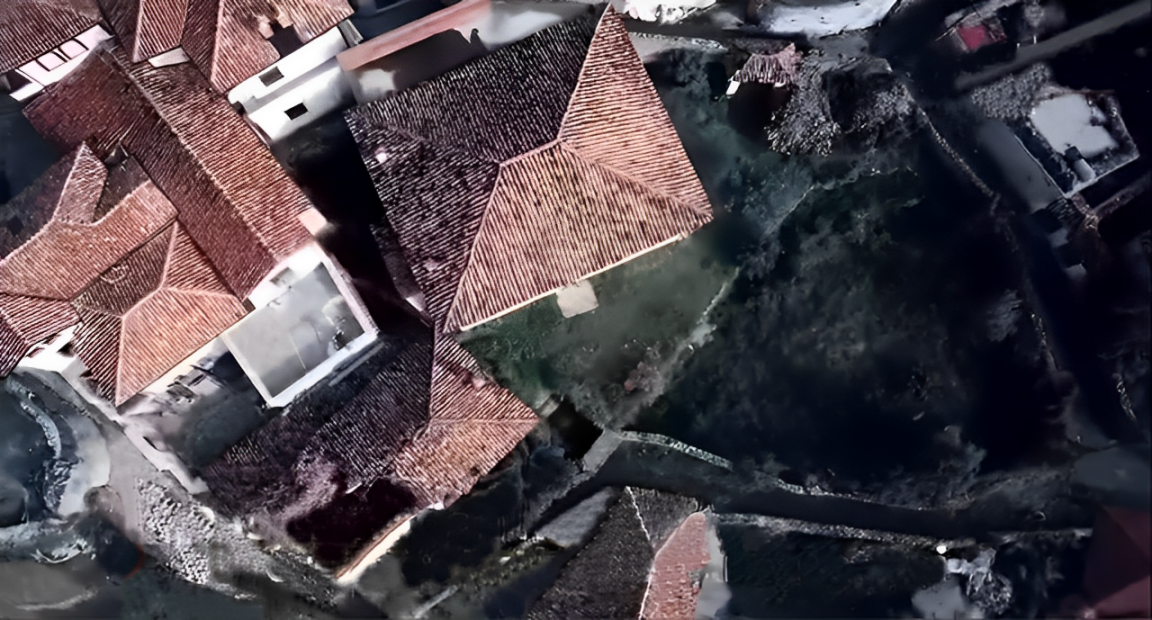
Complete dismantling of the partially collapsed roof, followed by its reconstruction including all components: structural elements, beams, wooden bands, and roof covering layers, finished with locally produced ceramic tiles in accordance with the original model. The eaves cladding and eaves cornices shall also be reconstructed following the existing design. Installation of horizontal and vertical rainwater drainage systems (gutters and downpipes).
Mechanical removal of vegetation from the façades.
Removal of deteriorated plaster layers, with mechanical cleaning using hand tools and soft brushes.
Structural consolidation of walls exhibiting deep cracks, using metal anchors and grout injection.
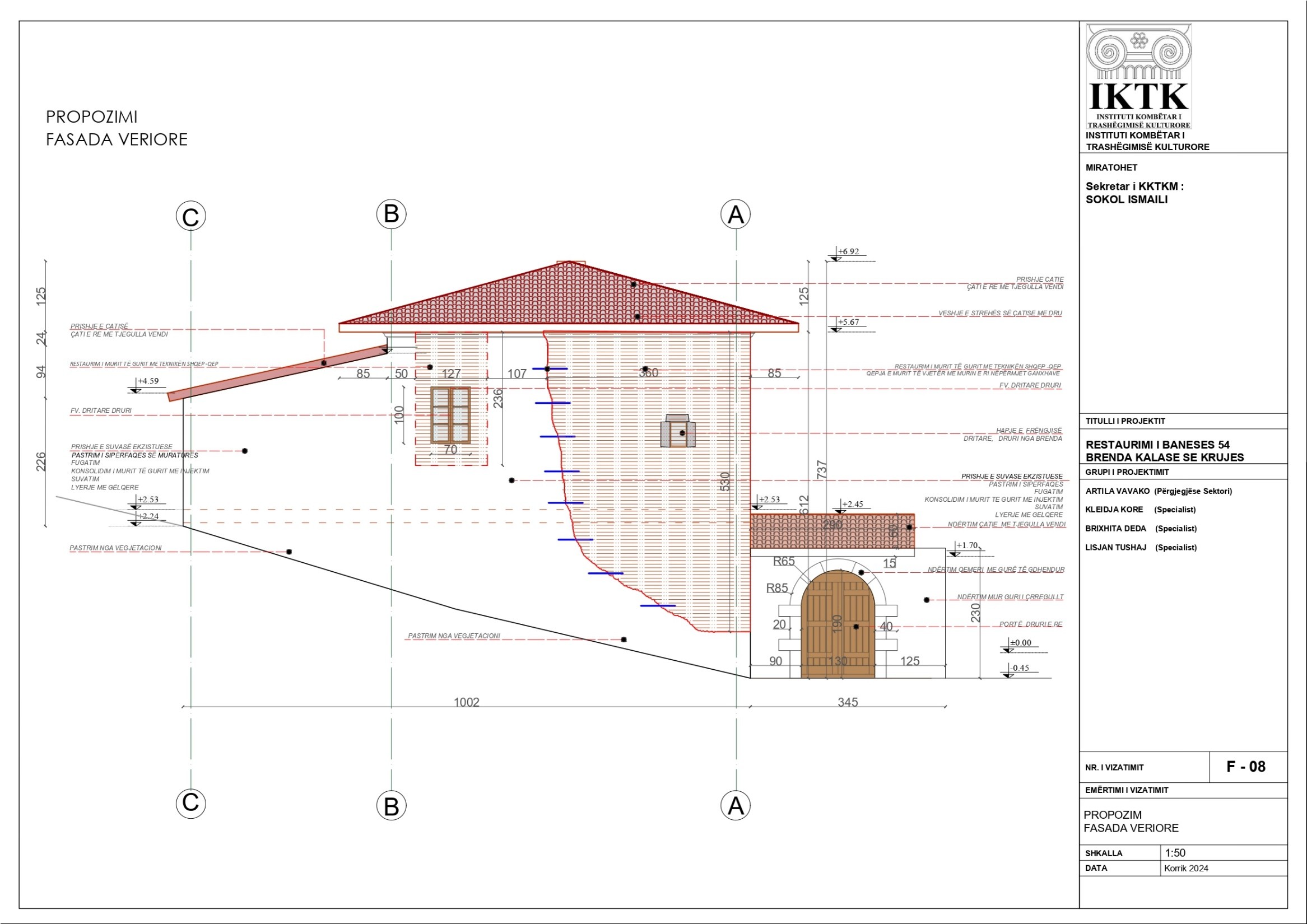
Restoration of masonry walls using the “stitch-and-repair” (shqep–qep) technique.
Overall consolidation of all stone masonry walls through injection and repointing with lime-based mortar, in accordance with traditional techniques.
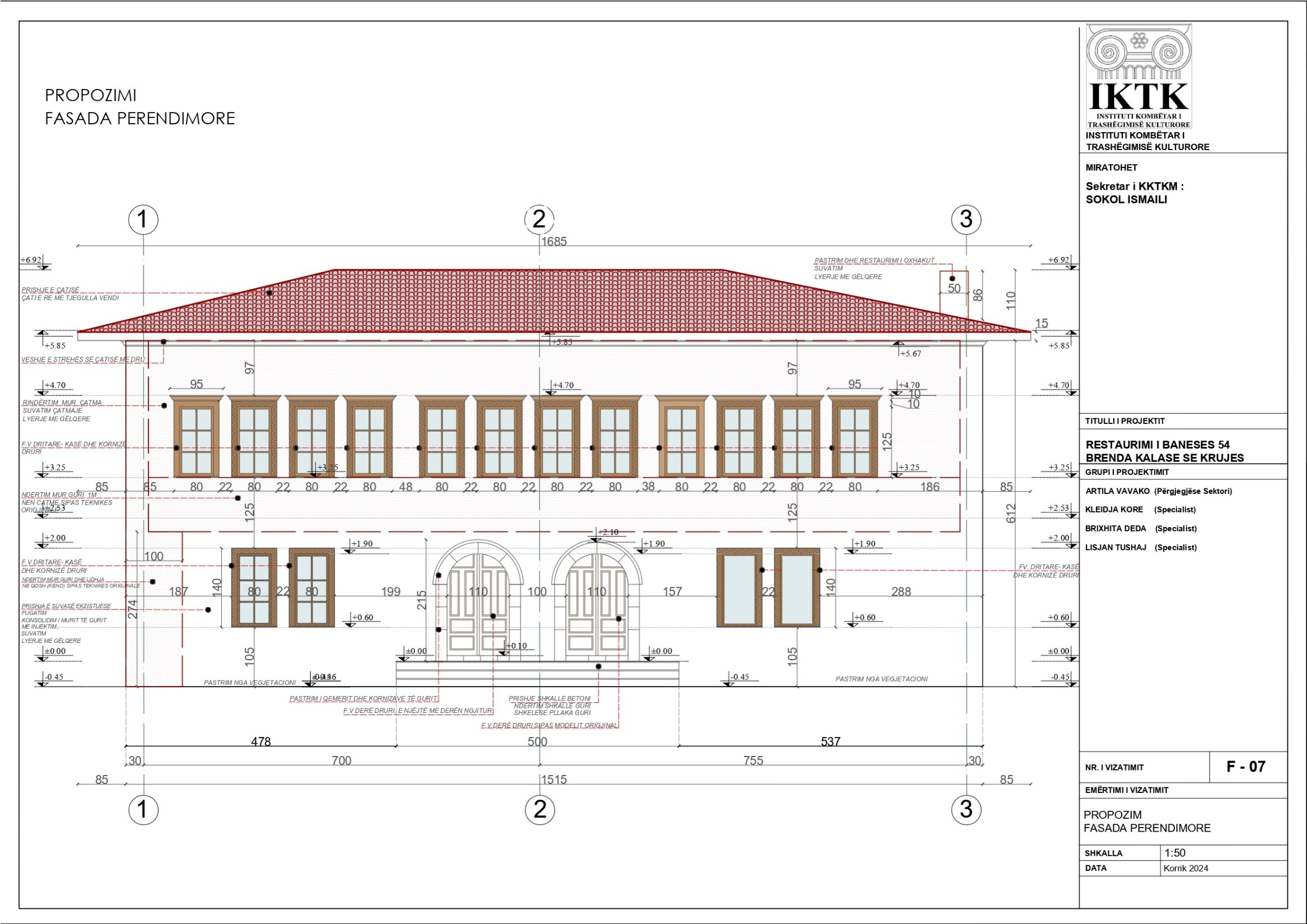
Demolition of infill walls with timber-lath (çatmë) construction and their reconstruction following the authentic model. Reconstruction of all timber-lath structures, both internally and on the main façade, using original techniques.
Reconstruction of the stone wall on the main façade, from the level of the external door openings up to the height of the timber-lath structure, following original construction methods.
Partial reconstruction of the mezzanine floor elements, including restoration of beams in a stable condition and replacement of deteriorated ones.
Demolition and reconstruction of floor structures on the ground floor and upper floor. Degraded materials, layers, and sublayers of the ground-floor flooring shall be replaced with new sublayers. Flooring on the ground floor shall be executed in stone slabs, while the upper floor shall be finished with wooden plank flooring, consistent with the original.
Reconstruction of two internal staircases, executed in timber with wooden handrails.
Restoration of lintels and beams, where applicable.
Dismantling of wooden plank ceilings on the ground floor and reed-mat ceilings on the upper floor, followed by installation of new ceilings identical to the originals.
Dismantling and installation of new windows, respecting the original materials and compositional model: wooden frames, original opening mechanisms, and single-pane glass.
Dismantling and installation of new external and internal doors, respecting original materials and design.
Removal and correction of inappropriate later interventions, such as cement-based mortars on wall surfaces, infilling of the embrasure with stone, oversized ground-floor windows, and infill masonry around window openings using solid bricks. These elements shall be restored as follows:
Installation of four windows on the western façade at ground-floor level, identical in model to those on the first floor;
Construction of entrance steps in stone, paved with stone slabs;
Reopening of the embrasure, installation of an operable glass window, and placement of an inward-opening wooden shutter.
Cleaning of stone arches and stone frames at both main entrance doors.
Mechanical removal of inappropriate cement-based joints, washing of surfaces with pressurized water, followed by repointing with lime-based mortar using traditional techniques.
Plastering of interior and exterior walls.
Finishing and limewashing of all wall surfaces.
Treatment and protection of all wooden surfaces with anti-insect solution and linseed oil.
External Works
Mechanical cleaning of all external surfaces from degradation products and vegetation developed over time.
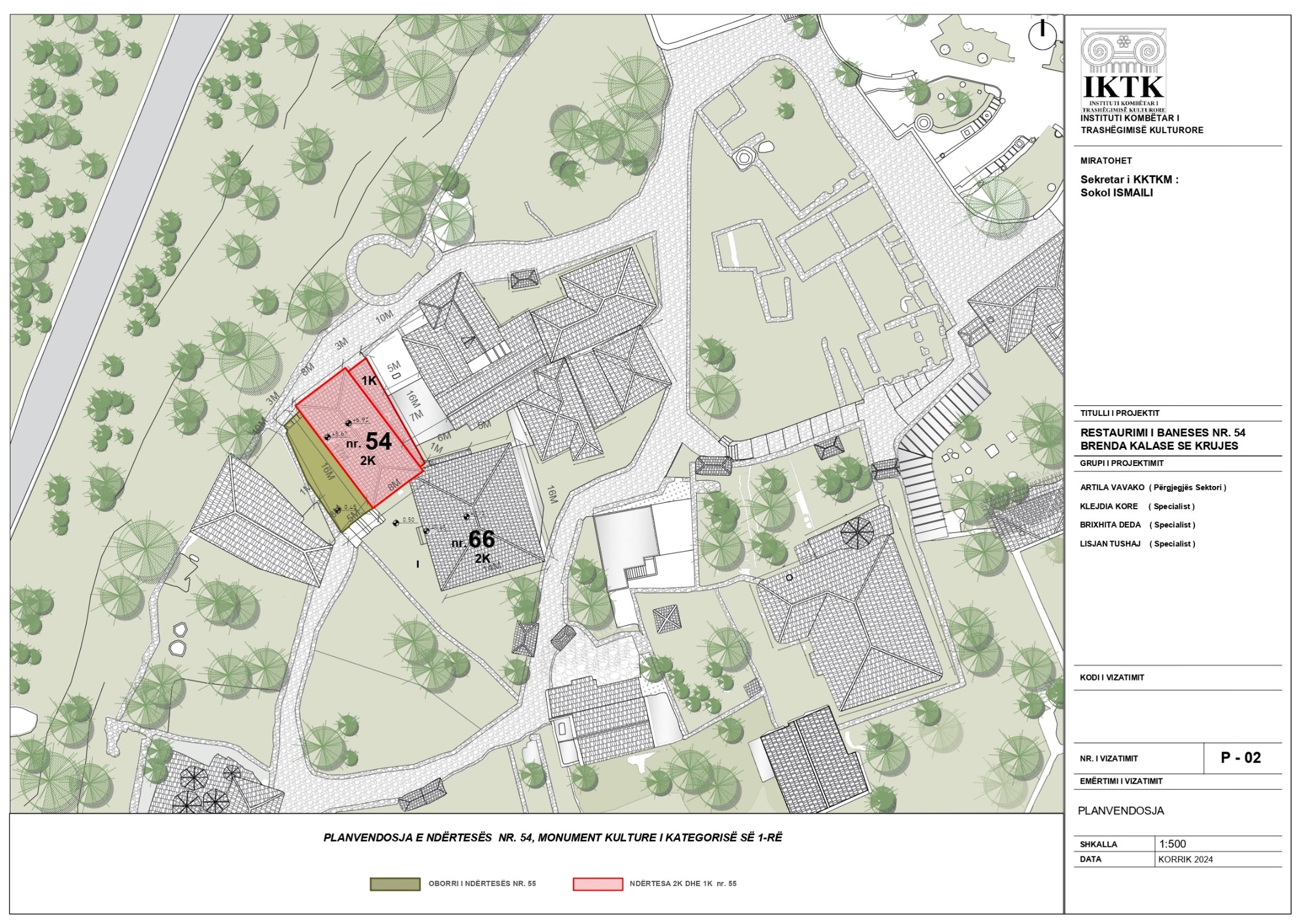
Landscaping of the courtyard of House No. 54 with stone paving (kalldrëm) up to the entrance steps, in continuity with the castle alleyways, while the remaining areas shall be left as soil/green surfaces.
Installation of a drainage system.
Restoration of the enclosing boundary wall, including capping of the wall head (avlli coping).
Demolition of the solid brick wall at the courtyard entrance, removal of the concrete slab above it, and dismantling of the courtyard gate, as these are considered inappropriate later interventions. Construction of a new enclosing wall in irregular stone at the entrance area, featuring an arched gateway with carved stone and a dual-pitched roof.
Bashkëpunime

Autori

Vendndodhja
Kalasë 54, 1501 Krujë, Albania